Running on Empty: The Quiet Burnout Crisis Threatening the Heart of America's Regional Theaters
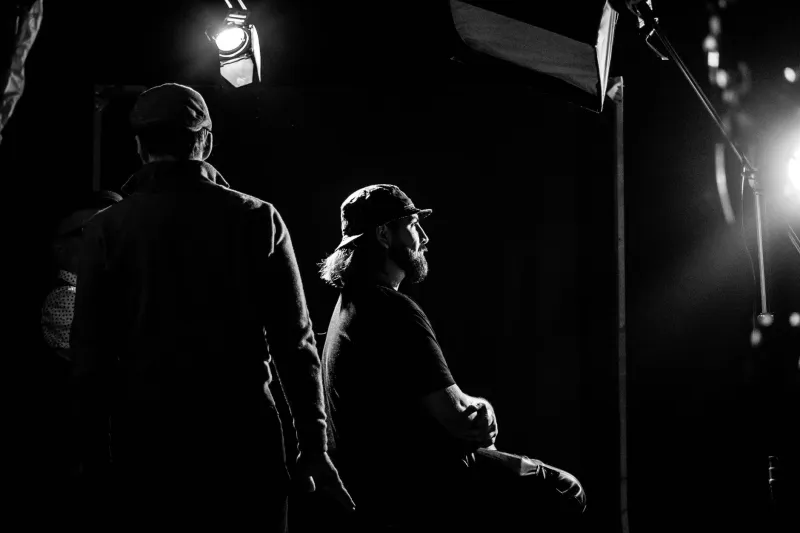
There is a particular kind of exhaustion that settles into the bones of a theater professional who has spent years doing the work of three people on the budget of one. It is not the productive fatigue of a closing-night strike or the satisfying weariness that follows a successful season opener. It is something quieter, more corrosive—a depletion that accumulates over seasons, grant cycles, and board meetings until the stage, once a source of profound meaning, begins to feel like an obligation the body can no longer honor.
This is the burnout that regional theaters across the United States are quietly grappling with, and its consequences for American theatrical culture are becoming increasingly difficult to ignore.
A Structural Problem Wearing a Human Face
The challenges facing mid-size regional theaters are well-documented in funding reports and arts advocacy white papers, but the human toll of those challenges is only beginning to surface in candid conversations within the industry. Artistic directors who once envisioned decades-long tenures are departing after five or six years. Stage managers with institutional knowledge spanning multiple administrations are transitioning into corporate event production or leaving the performing arts entirely. Development directors—the professionals responsible for sustaining the very organizations that employ everyone else—are burning through their reserves of goodwill and energy at an alarming rate.
What distinguishes this moment from previous periods of industry stress is the convergence of pressures arriving simultaneously. The post-pandemic recovery period demanded that theaters rebuild audience trust, retrain staff, and relaunch programming—often with reduced headcounts and frozen salaries. Inflation in construction and materials costs has accelerated the deferred maintenance problem that has quietly plagued regional facilities for decades. And the fundraising landscape, never forgiving, has grown more competitive as donors diversify their philanthropic portfolios across an expanding field of cultural organizations.
The result is a workforce that is structurally overextended, emotionally taxed, and increasingly uncertain about whether the personal costs of their commitment are sustainable.
The Invisible Weight of Institutional Responsibility
For artistic directors at mid-size theaters—organizations typically operating on annual budgets between one and ten million dollars—the role has expanded well beyond its original creative mandate. Today's artistic director is expected to function simultaneously as chief curator, lead fundraiser, public ambassador, community liaison, and internal culture keeper. In larger institutions, these responsibilities are distributed across a senior leadership team. In regional theaters, they frequently land on a single set of shoulders.
Stage managers occupy a similarly untenable position. Traditionally understood as the organizational nerve center of any production, the stage manager in a resource-constrained environment often absorbs responsibilities that properly belong to production managers, technical directors, and company managers who may not exist on a given organization's org chart. The cumulative weight of that absorption—maintained across multiple productions over multiple seasons—creates conditions that are physiologically and psychologically unsustainable.
What makes these dynamics particularly difficult to address is that they are largely invisible to the audiences who fill the seats on opening night. A beautifully realized production offers no evidence of the structural strain that produced it. The curtain rises on time. The lighting cues land with precision. The performances carry emotional truth. The machinery of sacrifice, in other words, works exactly as designed—until it doesn't.
When Experience Walks Out the Door
The departure of experienced theater professionals carries costs that extend far beyond the immediate disruption of a leadership transition. Institutional knowledge—the accumulated understanding of a building's idiosyncrasies, a community's preferences, a donor base's sensitivities, a company's artistic identity—is not easily documented or transferred. When a stage manager with fifteen years at a given theater leaves, they take with them a kind of operational wisdom that no onboarding process can fully restore.
This knowledge erosion compounds over time. Organizations that cycle through artistic leadership every few years find themselves perpetually in a state of institutional reinvention, unable to build the long-term relationships with artists, audiences, and funders that sustain a theater's cultural authority. The energy that might otherwise be directed toward artistic risk-taking is instead consumed by the ongoing work of organizational reconstruction.
The demographic implications are equally sobering. As mid-career professionals exit the field, the pipeline of experienced leadership available to regional theaters narrows. Emerging directors and administrators who might otherwise have benefited from mentorship relationships with seasoned colleagues are instead inheriting organizations in various states of structural fragility—and discovering the burnout cycle for themselves, often sooner than their predecessors did.
Theaters That Are Trying Something Different
Not every organization is accepting this trajectory as inevitable. Across the country, a number of regional theaters are experimenting with structural and cultural interventions designed to interrupt the burnout cycle before it reaches the point of departure.
Some theaters have begun formally redistributing the fundraising burden that has historically concentrated around artistic directors, creating dedicated development partnerships that allow creative leaders to spend more of their time and energy on programming decisions. Others have introduced mandatory sabbatical provisions into senior leadership contracts—a practice more common in academic institutions than in nonprofit arts organizations—giving key staff structured opportunities for renewal before depletion becomes irreversible.
Several mid-size companies have moved toward ensemble-based leadership models that distribute institutional authority more broadly, reducing the single-point-of-failure vulnerability that comes with concentrating decision-making in one or two individuals. This approach, while requiring significant cultural adjustment, appears to produce more resilient organizations with deeper bench strength.
Perhaps most promisingly, a growing number of theaters are investing in formal knowledge-transfer practices—structured documentation protocols, mentorship programs, and internal storytelling initiatives designed to capture and preserve institutional memory in ways that survive individual departures. These efforts acknowledge a fundamental truth: the history and identity of a theater organization belong to the institution, not to any single person within it.
The Larger Reckoning
The burnout crisis in regional theater is, at its core, a reflection of a broader societal failure to adequately resource the cultural infrastructure that communities depend upon. When public funding for the arts remains chronically insufficient and private philanthropy is subject to the fluctuations of economic cycles, the gap is inevitably filled by the labor of people who care deeply enough to absorb the difference—until they cannot.
Addressing this crisis in any meaningful way will require action at multiple levels: from funders willing to invest in organizational capacity rather than just programming, from boards prepared to govern with genuine strategic intentionality, and from the field itself as it develops more honest conversations about the human costs of institutional commitment.
The stage, at its best, is a place where human experience is examined with honesty and care. It is fitting, then, that the theater community is beginning to turn that same honesty inward—to look clearly at what it is asking of its people, and to consider whether the terms of that asking are ones a sustainable art form can afford to maintain.