One Light Left Burning: How an Ancient Stage Tradition Is Becoming a Lifeline for Performers' Mental Health
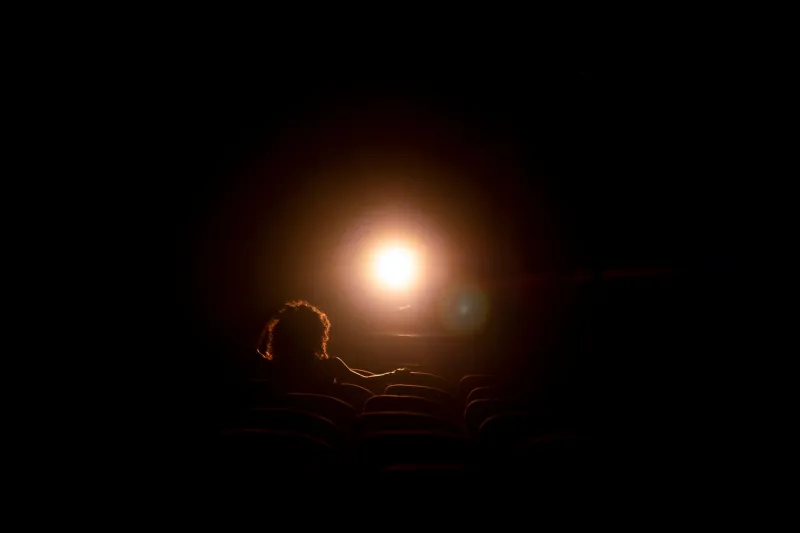
Every night, after the audience has emptied the house and the last technician has locked up, a single light remains. It stands at center stage—bare, unhurried, indifferent to the drama that preceded it—casting a pale circle across the boards. To the uninitiated, it is a practical precaution, a way to ensure that anyone entering the darkened theater does not stumble into an orchestra pit or trip over a set piece. To those who have spent their careers in the theater, it is something considerably more difficult to name.
The ghost light, as it has come to be known, predates modern electrical systems and formalized stage management protocols. Its origins are contested—some attribute it to superstition, others to union safety codes, still others to a more diffuse theatrical folklore that holds that stages are never truly empty, that the residue of performance lingers in ways that deserve acknowledgment. Whatever its genealogy, the tradition has endured. And in recent years, a growing number of performers, stage managers, and mental health practitioners working within the performing arts have begun to examine why it endures—and what psychological work it may quietly be doing.
A Space That Holds What the Performance Cannot
For many theater workers, the ghost light represents something that is difficult to articulate within the ordinary vocabulary of professional life: a formal recognition that the stage, even when vacant, remains a space of significance. Stage managers in particular have described the act of setting the ghost light as one of the most grounding moments of their working day—a ritual that marks the boundary between the intensity of production and the return to ordinary life.
"There's something about that moment," one veteran stage manager working in regional theater told us. "You've been holding everything together for three hours—every cue, every entrance, every emergency that almost happened and didn't. And then you set the light, and the building breathes out. And so do you."
This quality of delineation—of marking endings and honoring thresholds—is precisely what interests mental health professionals who work with performing artists. Psychologists who specialize in creative professions have long noted that the theater presents a particular set of emotional challenges: the intense social bonding of a production company followed by abrupt dissolution at closing night, the oscillation between profound visibility onstage and invisibility offstage, the physical and psychological demands of embodying characters who may carry grief, violence, or trauma.
When the Show Closes and the Light Stays On
The closing of a production is, for many performers, an experience that mainstream professional culture rarely acknowledges as genuinely difficult. The loss of a company, a role, a rehearsal room that has become a second home—these are real forms of grief, and they tend to arrive without ceremony or institutional support. In this context, the ghost light has taken on a meaning that extends well beyond safety protocol.
Several performers interviewed for this piece described returning to darkened theaters after closing nights—sometimes with permission, sometimes without—drawn back by something they struggled to define. One actor, a veteran of both Broadway tours and regional productions across the Midwest, described standing in the wings of a theater the morning after her final performance in a role she had inhabited for nearly two years.
"The ghost light was still on," she recalled. "And I just stood there. I didn't cry. I didn't do anything dramatic. I just let the space remind me that it was still there. That the stage wasn't gone just because the run was over. That felt important in a way I couldn't have explained at the time."
Mental health practitioners who work with performers have begun incorporating this kind of ritualized relationship with space into their therapeutic frameworks. The concept of transitional objects—borrowed from developmental psychology—offers one useful lens: just as a child may use a familiar object to navigate the anxiety of separation, a performer's relationship to the physical stage may provide a form of continuity that sustains psychological equilibrium across the inherently discontinuous arc of a theatrical career.
Anxiety, Presence, and the Practice of Returning
Performance anxiety is among the most commonly reported challenges facing theater artists at every level of the profession. It is also among the least straightforwardly addressed, in part because the very skills that make a performer effective—heightened sensitivity, emotional availability, a finely tuned awareness of audience response—are the same qualities that can render them vulnerable to debilitating anxiety before and during performance.
Some performers have described the ghost light as an unexpected resource in managing this anxiety. The practice of arriving early to a theater, before the chaos of pre-show preparation, and spending time alone on a lit stage has become, for some, a form of deliberate psychological preparation. The light, in this context, functions not as a symbol of theatrical superstition but as a cue for the nervous system—a signal that the space is safe, familiar, and ready to hold whatever the night requires.
"I started doing it during a particularly hard run," one performer explained. "I was struggling with anxiety in a way I hadn't before. My therapist suggested I find something concrete to anchor myself to before each performance. I started coming in early and just standing in the ghost light. Not doing anything. Just being in the space before anyone else arrived. It changed something."
This practice aligns with established principles in somatic psychology and mindfulness-based therapeutic approaches, which emphasize the role of physical environment and embodied sensation in regulating emotional states. For performers whose work is already deeply somatic—who have been trained to access emotion through breath, posture, and physical action—the stage itself can function as a kind of external nervous system, one that the ghost light keeps perpetually warm.
The Light as Institutional Memory
Beyond individual psychology, the ghost light also carries a collective dimension that theater institutions are beginning to take more seriously. In an era when burnout, financial precarity, and the psychological toll of pandemic-era theater closures have placed unprecedented pressure on performing arts organizations, some theater leaders have begun to think more intentionally about the rituals and practices that sustain a company's sense of shared identity over time.
The ghost light, in this framing, is not merely a safety device or a personal comfort. It is an act of institutional memory—a daily acknowledgment that the theater's life extends beyond any single production, any single season, any single generation of performers. It says, in effect, that the stage will be here tomorrow, and the day after that, and that the work of those who have passed through it is neither forgotten nor concluded.
For nonprofit theater organizations in particular—organizations whose missions are explicitly rooted in the idea that theater serves a community rather than a market—this dimension of the ghost light carries genuine organizational significance. It models, in miniature, the longer commitment that such institutions ask of their communities: to believe in the value of the stage even when the house is dark.
Honoring What the Stage Holds
The ghost light will not, on its own, resolve the mental health challenges facing American theater workers. Those challenges are structural, financial, and systemic, and they require structural, financial, and systemic responses. But the tradition endures for reasons that are not merely historical, and those reasons are worth attending to.
In a profession defined by impermanence—by productions that close, companies that dissolve, roles that end—the ghost light offers something quietly radical: a practice of continuity. A reminder that the stage does not end with the performance. That the space holds what has happened within it. That someone will return tomorrow, and the light will still be burning.
For the performers, stage managers, and theater workers who have found in that single bulb a source of grounding, comfort, or simply acknowledgment, that may be precisely enough.