The Long Game: What Keeps Performers in the Wings When the Lead Never Calls Their Name
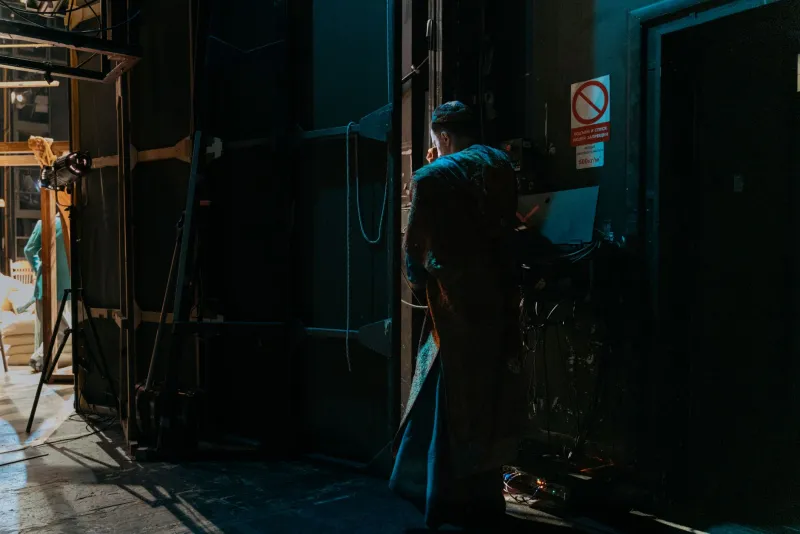
There is a particular kind of courage that theater audiences never witness. It belongs to the performer who has memorized every line of a role they may never play, who stands in the wings each night watching someone else receive the ovation, who returns the following evening prepared to do it all again. This is not a story about failure. In many cases, it is not even a story about disappointment. It is a story about devotion—complicated, honest, and rarely told.
Across American theater, from the regional stages of Minneapolis and Houston to the storied houses of New York City, a significant portion of the working performer population occupies a professional middle ground: committed enough to sustain a career, skilled enough to have earned one, and yet consistently positioned outside the center of attention. Understanding why so many of them remain—and what it costs them to do so—offers a more complete portrait of what theatrical life actually looks like for most of the people who choose it.
The Architecture of an Invisible Career
The understudy relationship is, in structural terms, one of the stranger arrangements in professional life. A performer is hired to be ready for a role they statistically may never perform. They attend rehearsals, absorb blocking, track the physical and vocal choices of the principal actor, and hold all of that knowledge in a kind of suspended readiness. In long-running productions, weeks can stretch into months without a single cover performance. The preparation remains constant; the opportunity does not always arrive.
Beyond understudies, ensemble performers occupy similarly ambiguous territory. They contribute meaningfully to the visual and emotional texture of a production—sometimes carrying scenes that audiences remember without knowing who carried them—while remaining largely anonymous in the program's billing hierarchy. In a culture that prizes individual recognition, this kind of structural invisibility can be quietly corrosive, even when the work itself is genuinely satisfying.
What makes the situation more complex is that these roles are not always chosen freely. Many performers enter ensemble or understudy positions as a practical necessity, accepting available work in the hope that visibility will eventually translate into advancement. When it does not, the original compromise can harden into a permanent condition—one that requires active psychological renegotiation.
Staying by Choice: The Case for Craft Over Stardom
Not every performer who remains in supporting work does so reluctantly. A meaningful number make a considered decision to prioritize other values: artistic community, geographic stability, the satisfaction of deep craft, or simply the sustainable pleasure of doing work they love without the pressures that accompany leading-role status.
For these individuals, the ensemble is not a consolation prize. It is the point. Theater, at its most essential, is a collaborative art form—one in which the quality of the whole depends on the commitment of every participant. Performers who genuinely internalize this understanding often describe a sense of professional fulfillment that is not contingent on billing. They speak of the pleasure of precision, of finding meaning in the execution of a difficult piece of staging, of the particular satisfaction that comes from supporting a scene rather than anchoring it.
This orientation is not without its complications. American culture tends to equate success with visibility, and performers who do not advance in conventional ways frequently encounter skepticism from family members, former classmates, and industry contacts who interpret longevity in supporting roles as evidence of stagnation. Navigating that perception—while maintaining genuine confidence in one's own choices—requires a psychological resilience that rarely receives adequate acknowledgment.
The Weight of Unfulfilled Ambition
For others, the experience is considerably more painful. Performers who entered the profession with clear aspirations toward leading roles, and who find those aspirations repeatedly deferred, often describe a slow accumulation of grief that is difficult to articulate publicly. The theatrical community places high value on optimism and resilience, and there are few sanctioned spaces in which to honestly process the experience of wanting something deeply and not receiving it.
This grief is not always proportional to objective measures of career success. A performer who has worked steadily for fifteen years, appeared in dozens of productions, and earned the respect of directors and colleagues may still carry a private sense of incompleteness if the roles they most wanted never materialized. The gap between what was achieved and what was imagined can remain wide even when the achievement is, by most reasonable standards, substantial.
Therapists and coaches who work with performing artists note that this particular form of professional grief is often complicated by the delayed nature of theatrical careers. Unlike fields with clearer advancement timelines, theater offers few definitive markers of failure. There is always another audition, another season, another production that might change the trajectory. This perpetual openness can be sustaining, but it can also prevent performers from making clear-eyed decisions about when to stay and when to redirect their energies.
The Pivot Decision: Leaving Without Losing
Some performers ultimately choose to transition out of performance entirely, moving into related fields—directing, teaching, stage management, arts administration—where their knowledge remains valuable and their sense of theatrical identity can be preserved. For many, this pivot represents not a defeat but a maturation: a recognition that their relationship to the art form was always larger than any single role within it.
Others remain in performance while recalibrating their expectations and their sources of meaning. They continue to audition, to accept ensemble work, to maintain the physical and vocal disciplines of their training—but they do so within a framework that no longer depends on a specific outcome. This is, by most accounts, the harder path. It requires genuine acceptance rather than mere resignation, and the two are not always easy to distinguish.
What both groups tend to share is a deepened understanding of what theater actually is: not a system designed to reward talent with stardom, but a living institution sustained by the cumulative commitment of people at every level of visibility. The performer who has spent a career in the wings often carries this understanding more fully than the one who moved quickly into leading roles. That knowledge is its own form of expertise.
What the Stage Owes Its Quieter Devotees
The American theatrical community has not always served these performers well. Institutional structures tend to celebrate the exceptional individual rather than the conditions that make collective work possible. Conversations about career development in theater frequently focus on how to advance, with comparatively little attention given to how to sustain a meaningful professional life at whatever level one occupies.
There is a growing recognition, however, that this gap matters—not only for the well-being of individual performers, but for the health of the art form itself. Theater that honors only its most visible participants is theater that gradually loses the depth and texture that distinguishes it from more commercially oriented entertainment. The ensemble performer, the experienced understudy, the character actor who has spent decades perfecting a specific range of human truth: these are not peripheral figures. They are, in many ways, the institution's foundation.
The long game, for those who choose to play it, is not always comfortable. But it is, for many, the most honest relationship with theater that a life in the profession allows.