Objects of Consequence: The Hidden Artistry of Theater's Prop Masters
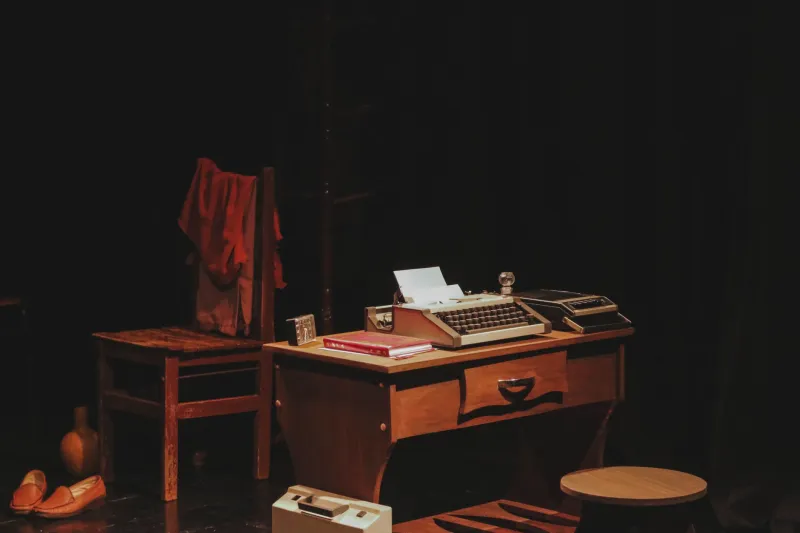
There is a particular kind of success that prop masters spend their careers chasing: invisibility. When an actor lifts a teacup and the audience never once wonders whether it belongs to the period, the prop master has done the job perfectly. When a soldier draws a sword and the weight of history seems to travel down the blade and into the performer's arm, something extraordinary has occurred—and almost no one in the house will consciously register it.
This is the paradox at the center of one of American theater's most demanding and least celebrated crafts. Prop masters are, in the truest sense, storytellers who work entirely in the third person. Their narratives are told through objects, and the best of those objects disappear into the world of the play so completely that they seem to have always existed there.
More Than Furniture: Defining the Prop Master's Domain
The term "props" is deceptively casual—a shorthand that obscures the extraordinary breadth of what the discipline actually encompasses. In professional American theater, a prop master may be responsible for anything a performer touches, carries, or directly interacts with during the course of a production. That scope can range from a single pocket watch in a minimalist two-hander to hundreds of individual items populating the world of a large-scale historical drama.
The distinction between what belongs to the prop department and what falls under scenic or costume design varies by production and institution, but the prop master's core responsibility remains consistent: to ensure that every object in a performer's hands serves the story. That service is simultaneously practical and deeply interpretive. A prop master must understand not only what an object looks like, but what it means—within the script, within the production's visual language, and within the emotional arc of the characters who handle it.
For many working in the field, this interpretive dimension is what drew them to the craft in the first place. The most compelling props, practitioners often say, are the ones that carry a biography of their own.
Research as Foundation
Before a single object is sourced, built, or modified, serious prop work begins in the archive. Regional theater prop masters routinely spend weeks—sometimes months—in libraries, museum collections, and specialized databases, building a material culture profile of the world a production intends to inhabit.
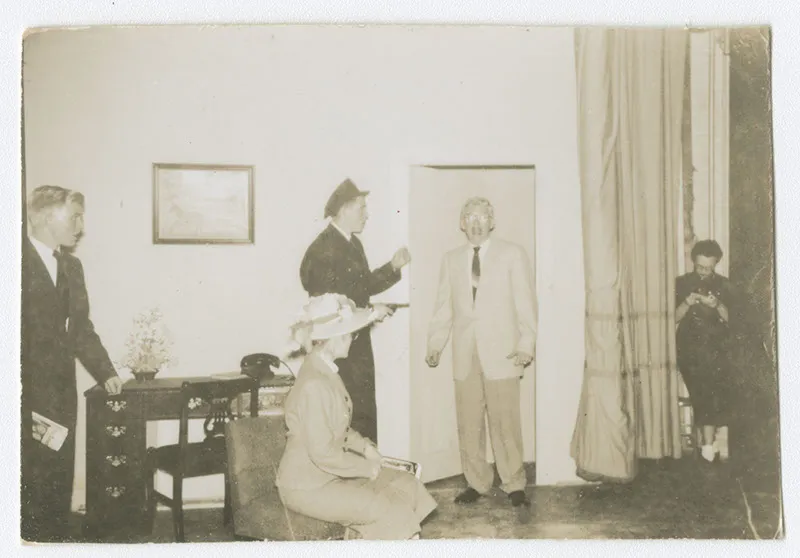
This research is not merely about visual accuracy, though accuracy matters enormously. It is about understanding how people of a particular time and place related to their objects: how they held them, what they signified socially, how wear and use would have altered them over time. A middle-class American household in 1952 would have contained objects that looked, felt, and functioned in specific ways that distinguish them from their counterparts a decade earlier or later. Getting those details right is the difference between an audience that leans forward and one that sits back with a nagging, unnameable discomfort.
For productions rooted in contemporary settings, the research challenge shifts but does not diminish. Brand identities, technological interfaces, and even the typography on a printed document carry cultural information that audiences process instantly, often without awareness. A smartphone that looks one generation too old, a takeout container from a chain that doesn't exist in the city where the play is set—these are the kinds of details that erode an audience's trust in ways that are difficult to diagnose but easy to feel.
The Art of Making Things Old
Among the most technically demanding aspects of prop work is the practice known in the field as "aging" or "distressing"—the deliberate manipulation of new objects to suggest a history they have not actually lived. This is part chemistry, part sculpture, and part performance in its own right.
A prop master aging a leather-bound journal for a period production must consider not only the color and texture of the cover, but the specific patterns of wear that would result from years of handling. Corners soften differently than spines. Ink fades unevenly depending on light exposure. Pages yellow in gradients that reflect how a book was stored. Reproducing these effects convincingly requires both technical knowledge and a kind of empathetic imagination—an ability to inhabit the life of the object and understand what it would have endured.
Similarly, weapons fabricated for stage use—swords, daggers, period firearms—must meet strict safety standards while still communicating weight, danger, and historical specificity to performers and audiences alike. The materials used in safe stage weaponry rarely behave the way their historical counterparts would, which means prop masters working in this area must become sophisticated illusionists, engineering the impression of authentic materials through entirely different means.
When Objects Become Characters
Perhaps the most profound dimension of prop mastery is the relationship between an object and the performer who carries it. In the best productions, this relationship develops over weeks of rehearsal, and the prop master plays a quiet but essential role in facilitating it.
Some directors and performers speak of certain props as having a kind of gravitational pull—objects so precisely right that they seem to unlock something in the performance that was previously inaccessible. A letter written in a particular hand, on paper of a specific weight and texture, sealed in a way that requires a particular gesture to open: each of these qualities communicates information to the actor's body and, through the body, to the audience. The prop master who understood that the letter needed to feel fragile, to carry the sense that it might not survive another reading, has contributed something to the performance that no amount of directorial instruction could fully replicate.
This is the territory where prop work crosses from craft into art—where the physical object becomes a vessel for meaning that exceeds its literal function. In American theater, where the tradition of psychological realism runs deep, this dimension of prop work carries particular weight. Audiences trained on a century of naturalistic performance are exquisitely sensitive to the authenticity of objects, even when they cannot articulate why.
Sustaining the World Through a Run
The prop master's responsibilities do not conclude when a production opens. Maintaining the prop inventory through the duration of a run—ensuring that perishables are replenished, that breakable items are repaired or replaced, that the cumulative wear of repeated performances does not compromise the integrity of the world the production has built—requires organizational discipline and a deep familiarity with every object in the show.
For long-running productions, this maintenance work becomes its own craft. A consumable prop—food eaten on stage, a document destroyed in a climactic scene—must be reproduced identically for every performance. The actor who has spent weeks building a relationship with a specific object deserves a replacement that honors that relationship. The audience attending on a Tuesday night in the sixth month of a run deserves the same material world as the audience that attended opening night.
A Craft Worth Seeing
For theater enthusiasts seeking a deeper understanding of American performance, there is something genuinely revelatory about attending to the objects on stage with the same attention one might give to the performances themselves. The worn edge of a suitcase handle. The particular way a telephone receiver sits in an actor's palm. The faint inscription on a ring that no one in the audience will ever read but that the actor will feel against their finger for every performance.
These are the contributions of prop masters—patient, rigorous, imaginative artisans who build the material foundation upon which performance rests. Their greatest work is the work that goes unnoticed. And that, for those who truly understand the craft, is the highest compliment the stage can offer.