The Unseen Architects: Inside the Lives of the Workers Who Hold American Theater Together
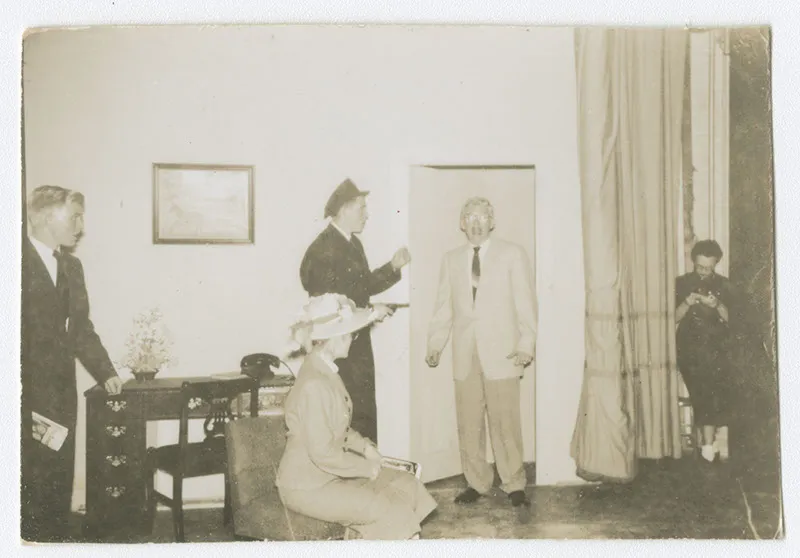
Photo: Bennett, Vera "Buzzie", Public domain, via Wikimedia Commons
The curtain falls. The applause subsides. The last theatergoer retrieves a coat and steps out into the night air. And then, almost immediately, the real work begins.
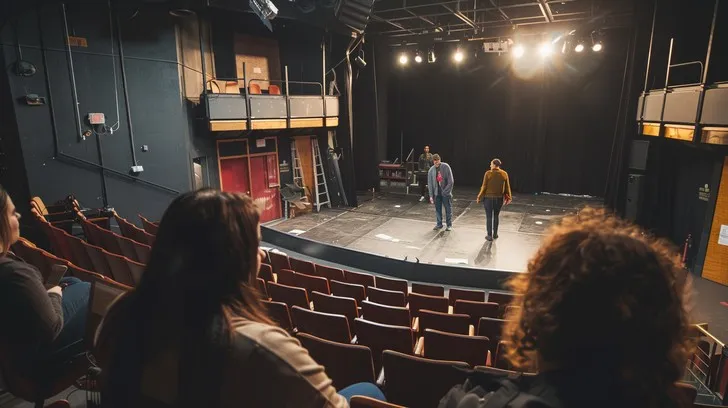
In theaters across the United States—from the grand houses of Broadway to the intimate black-box venues of Chicago, Atlanta, and Seattle—a second company of workers moves into action. They haul rigging, sweep sawdust from trap doors, reset furniture for tomorrow's matinee, and check every cable, counterweight, and cue light with methodical precision. These are the individuals who make live theater possible, not merely in a supporting sense, but in the most foundational way imaginable. Without them, the stage is simply an empty room.
The Weight of the Work
Dennis Hartley has worked as a head flyman at a regional theater in Minneapolis for twenty-three years. His job involves operating the fly system—the complex network of ropes, pulleys, and counterweights that raise and lower scenery, curtains, and lighting instruments above the stage. It is physically demanding, spatially intricate work that demands both muscular endurance and an almost architectural understanding of how a production is constructed.
"People think the flying is automatic," Hartley says. "They see the scenery move and assume it's mechanical. But there's a person up there making those decisions in real time, adjusting for weight shifts, for timing, for what the director changed in the final dress rehearsal."
His observation points to something that audiences rarely consider: the backstage crew does not simply execute a fixed plan. They respond, adapt, and problem-solve throughout every single performance. A piece of scenery that flies two inches lower than intended on opening night may need to be adjusted by the third show. A lighting fixture that shifts due to humidity in an older building requires recalibration before it affects a performer's visibility. These are not mechanical failures so much as they are the natural demands of a living, breathing art form.
The Custodians of the Space
If stagehands are the engineers of theatrical production, then the cleaning and maintenance staff are its physicians—diagnosing the condition of a space and restoring it to health, night after night.
Margarita Solano has worked as a lead facilities technician at a mid-sized theater in San Antonio for eleven years. Her responsibilities extend well beyond mopping floors and emptying trash cans. She manages the structural integrity of the stage surface itself, a task that carries genuine artistic consequences.
"A warped stage board can change how an actor walks," she explains. "If the floor isn't level, it affects their posture, their movement, their confidence. I've seen performers complain about a scene feeling 'off,' and when we investigated, it came back to the floor."
This level of interconnection between the physical environment and the live performance is rarely discussed in critical reviews or production features. Yet it represents one of the most direct relationships between backstage labor and artistic outcome. A well-maintained stage is not merely a matter of cleanliness—it is a precondition for the kind of embodied, physically committed performance that theater demands of its artists.
Knowledge That Cannot Be Taught in a Classroom
What distinguishes the most experienced theater workers from their newer counterparts is not simply the accumulation of hours, but the development of an intuitive understanding of how theatrical spaces behave. This knowledge is largely tacit—transmitted through observation, apprenticeship, and the slow accumulation of experience across productions.
Robert Chiang, a properties master at a nonprofit theater company in Portland, Oregon, has spent eighteen years sourcing, building, and maintaining the objects that populate stage productions. He describes his role as part archivist, part craftsman, and part dramaturg.
"Every prop tells a story about the world of the play," he says. "When I'm building or sourcing something, I'm thinking about the period, the character's economic status, how it will read from the back row. I'm thinking about what the director wants and what the actor needs to feel comfortable holding it."
Chiang's framing reveals a dimension of technical theater work that is often underappreciated: it is fundamentally interpretive. The best stagehands, properties masters, and facilities technicians are not merely executing instructions. They are engaged in an ongoing act of artistic interpretation, translating a production's conceptual vision into physical reality.
The Ghost Light and What It Represents
There is a tradition in American theater known as the ghost light—a single bare bulb placed at the center of an empty stage when the theater is dark and all other personnel have gone home. Its origins are practical: it prevents anyone from walking into the orchestra pit in the dark. But over time, it has accumulated layers of symbolic meaning, serving as a kind of vigil, a testament to the idea that a theater is never truly empty.
For many of the workers who maintain these spaces, the ghost light carries personal resonance. It represents continuity—the sense that the work of keeping a theater alive is ongoing, cyclical, and never fully complete.
"I've walked into this building at five in the morning more times than I can count," says Hartley. "And that light is always there. It reminds me that someone else was here before me, and someone else will be here after. We're all just keeping the place ready."
Recognition and the Road Ahead
In recent years, there has been a growing movement within the American theatrical community to extend greater formal recognition to behind-the-scenes workers. Several theater organizations have begun crediting technical and facilities staff more prominently in their programs and promotional materials. Some companies have introduced internal recognition programs that highlight the contributions of long-serving crew members.
These efforts, while meaningful, are still far from universal. The labor conditions of stagehands and theater maintenance workers vary significantly depending on whether a venue is unionized, its budget size, and the priorities of its leadership. In many smaller nonprofit theaters, technical staff are part-time employees or volunteers who receive little formal acknowledgment of the expertise they bring to their work.
The conversation around equity and visibility in theatrical labor is, in many ways, an extension of broader discussions happening across the American arts sector. Who gets credited? Who gets compensated fairly? Whose knowledge is treated as professional expertise rather than mere service work? These are questions that the theater community is only beginning to answer with the seriousness they deserve.
What the Audience Owes the Crew
When a performance moves an audience member to tears, or draws a standing ovation, or lingers in the memory long after the house lights rise, that experience is the product of an enormous collaborative effort. The performers onstage are the most visible contributors to that moment—but they are not the only ones.
The stage that holds them was prepared by someone who arrived before sunrise. The rigging above them was set by someone who checked every line by hand. The props they carry were chosen and maintained by someone who thought carefully about what each object communicates. The air in the theater was managed by someone who understood how temperature and humidity affect both the building and the people inside it.
These workers are, in the truest sense, architects of the theatrical experience. And American theater—in all its vitality and ambition—is only as strong as the people who hold its stages together.