Standing By: The Quiet Mastery of Theater's Understudies and Swing Performers

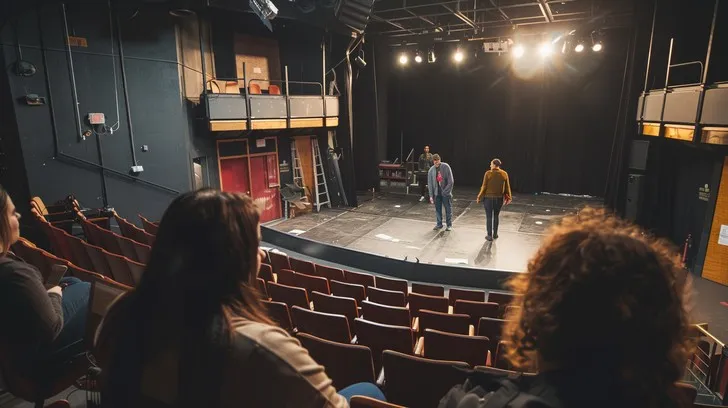
Photo by Photo by Sam Spencer on Unsplash on Unsplash
Every great theatrical production carries within it a second, largely invisible cast—performers who memorize every line, every blocking note, and every emotional beat of roles they may never perform. These understudies and swing performers occupy one of American theater's most demanding and least celebrated positions, yet their contributions quietly sustain the art form night after night. For those willing to embrace the uncertainty, the understudy track offers something far more valuable than guaranteed applause: a relentless education in theatrical craft.
A Role Within a Role
To understand what an understudy truly does, one must first abandon the casual assumption that they are merely backup performers waiting in the wings with a script tucked under one arm. The reality is considerably more complex. An understudy must absorb not only their own character's journey but also the spatial and emotional dynamics of every scene in which that character appears. They attend rehearsals, often without participating in them. They watch, they take notes, and they internalize a performance that belongs, for the moment, to someone else.
Swing performers—who cover ensemble tracks in musical productions—face an even more formidable challenge. A single swing may be responsible for covering six, eight, or even ten separate ensemble roles, each with its own choreography, staging, and musical cues. In the world of Broadway and major regional theater, a swing performer is, by any reasonable measure, among the most technically accomplished artists in the building.
"People don't realize that a swing has to hold an entire show in their head simultaneously," explains one performer who has worked as a swing on two separate Broadway productions. "You're not just learning your track. You're learning everyone's track so that when someone goes out, the whole puzzle still fits together."
The Psychological Landscape of Perpetual Readiness
Beyond the technical demands lies a psychological terrain that few theatrical roles require performers to navigate. Understudies must maintain a state of sustained readiness—alert, prepared, and emotionally available—without the regular reinforcement that comes from performing. Unlike a principal cast member who receives nightly feedback from an audience, an understudy may go weeks or months without stepping onto the stage in their covered role.
This particular form of professional limbo demands a remarkable degree of internal discipline. The performer must stay connected to material that they are not actively performing, preserving the emotional truth of scenes they may have rehearsed but never presented before a live audience. Theatrical educators and coaches who work with understudies frequently describe this as one of the most sophisticated psychological skills in the profession.
"There's a certain kind of performer who thrives in that position and a certain kind who finds it genuinely difficult," notes a veteran stage manager who has overseen productions at regional theaters across the Midwest and on Broadway. "The ones who succeed tend to be deeply curious people. They're watching the show every night not because they have to, but because they're fascinated by it."
The emotional stakes intensify when the call finally comes. An understudy stepping into a leading role—sometimes with only hours of notice—must summon a fully realized performance without the benefit of the gradual confidence that builds through a traditional rehearsal process. The audience before them may not know a substitution has occurred. The other performers on stage are accustomed to a different body, a different voice, a different set of instincts. The understudy must hold all of this together while simultaneously trusting the preparation they have quietly accumulated.
When the Moment Arrives
American theater has produced countless stories of understudies stepping into roles and delivering performances that became legendary in their own right. The tradition stretches back generations, from understudies who covered ailing stars in the golden age of Broadway to contemporary performers who have built entire careers on the foundation of understudy experience.
One performer who understudied a principal role in a major regional production of a classic American drama recalls the night she received the call with a mixture of clarity and disbelief. "It was a Tuesday afternoon," she says. "I had about four hours. I remember standing in the wings before my first entrance thinking: every single choice I've made in rehearsal was for this moment. Either I trust that work, or I don't."
She trusted it. The performance, by her account and that of the production's director, was fully realized and deeply felt. Several months later, she was cast in a principal role at a different regional theater—a casting decision the director attributed in part to what she had demonstrated during that single performance.
This pattern—the understudy experience functioning as an unexpected professional catalyst—repeats itself throughout American theater with notable consistency. Directors and casting professionals who have spoken with EA Theatre describe the understudy track as one of the most reliable indicators of a performer's readiness for principal work.
An Education Unlike Any Other
For emerging performers, the understudy and swing experience offers an immersive theatrical education that no conservatory program fully replicates. Watching a production from the inside, night after night, provides an analytical perspective on performance that is nearly impossible to acquire any other way. Understudies develop an acute sensitivity to what works in a scene and why, to the invisible negotiations between performers that generate genuine chemistry, and to the thousand small decisions that accumulate into a compelling theatrical experience.
Many of the American theater's most respected performers have spoken publicly about formative periods spent in understudy positions. The experience, they suggest, teaches not only the mechanics of performance but also the virtue of patience—a quality that sustains long careers in a profession defined by uncertainty.
Theater training programs at universities and conservatories across the country have begun to incorporate understudy simulation into their curricula, recognizing that the skill set required goes well beyond standard performance preparation. Students are asked to cover roles they are not cast in, to remain ready without performing, and to step in with minimal notice. The exercise, instructors report, reveals dimensions of a student's craft that conventional scene study simply cannot access.
The Art of the Invisible Contribution
There is, perhaps, no more fitting symbol of theatrical dedication than the understudy who never performs—who prepares with complete commitment for an opportunity that never materializes, and who considers that preparation worthwhile regardless. This willingness to contribute without recognition, to serve the production rather than the self, reflects something essential about the communal nature of live theater.
American theater owes a considerable debt to these performers who stand by, season after season, holding productions together with their unseen preparation. EA Theatre recognizes that the stage comes to life not only in the moments audiences witness, but in the countless hours of quiet, disciplined work that make those moments possible. The understudy's art is, in the truest sense, the art of readiness—and readiness, as every experienced theater professional knows, is the foundation upon which all great performances are built.