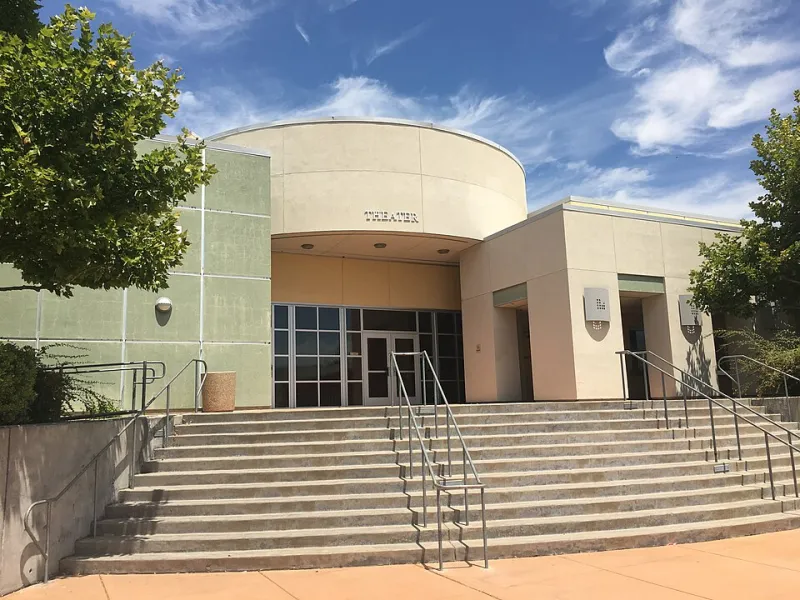
Beyond the Bright Lights: Why America's Regional Theaters Are Winning the Hearts of the Nation's Best Performers
Photo: Vyacheslav Kirillin, CC BY-SA 4.0, via Wikimedia Commons
For generations, the narrative of theatrical ambition in America has followed a well-worn path: train hard, move to New York City, and measure success in callbacks, credits, and curtain calls on Broadway. Yet something has shifted in recent years — quietly at first, then with unmistakable momentum. Seasoned performers, emerging artists, and accomplished directors are deliberately choosing to build their careers not under the marquees of Midtown Manhattan, but within the intimate, community-rooted stages of regional theater companies scattered across the United States.
This is not a story of retreat. It is a story of redefinition.
The Pressure Behind the Departure
To understand why so many artists are looking beyond New York, one must first reckon honestly with what the city demands of its performers. The financial burden alone is staggering. A working actor in New York City may spend upwards of $2,500 per month on rent for modest accommodations, while simultaneously investing in headshots, classes, union dues, and audition travel. Employment between significant theatrical engagements is common, and the psychological toll of perpetual uncertainty — the waiting, the rejection, the competition — accumulates over years into what many performers describe simply as burnout.
A 2023 survey conducted by the Actors' Equity Association revealed that a growing percentage of its members reported considering or actively pursuing relocation to markets outside of New York and Los Angeles. The reasons cited were varied but converged around a shared theme: the pursuit of artistic work that was both meaningful and sustainable.
"There comes a point where you have to ask yourself what you are actually doing this for," said one veteran performer who spent eleven years navigating the New York audition circuit before accepting a resident artist position with a regional company in the Midwest. "The work I am doing now is some of the most challenging and rewarding of my career, and I am able to be present for it — not just physically, but emotionally."
Regional Theater as Artistic Ecosystem
What regional theater offers is not a consolation prize but a genuinely distinct creative environment. Companies such as the Steppenwolf Theatre Company in Chicago, the Guthrie Theater in Minneapolis, the Oregon Shakespeare Festival in Ashland, and the Arena Stage in Washington, D.C. have long been recognized as institutions of national significance. These organizations produce work of extraordinary ambition, attract world-class creative teams, and command the attention of critics and audiences far beyond their immediate geographic boundaries.
Beyond the flagship names, however, a second and third tier of regional companies has emerged across the country, each cultivating its own identity and audience. From the Actors Theatre of Louisville — home of the celebrated Humana Festival of New American Plays — to smaller but fiercely dedicated companies in cities like Boise, Albuquerque, and Richmond, these organizations are creating conditions in which artists can genuinely thrive.
For many performers, the appeal is rooted in depth of engagement. Regional companies frequently offer extended rehearsal periods, opportunities to develop new work, and the kind of ongoing relationships with directors and designers that Broadway's transactional production model rarely accommodates. A performer cast in a regional season might work with the same creative team across multiple productions, building an artistic shorthand and trust that elevates the quality of the work itself.
Community as Creative Currency
Perhaps the most underappreciated dimension of regional theater's appeal is the relationship performers develop with the communities they serve. In New York, an actor may perform for audiences drawn from across the globe — tourists, industry professionals, and occasional locals — but rarely develops a sustained relationship with any of them. In a regional context, the dynamic is fundamentally different.
Performers who relocate to cities like Kansas City, Nashville, or Providence often find themselves embedded in the cultural fabric of their communities in ways that prove both personally enriching and artistically generative. They teach master classes at local universities, lead workshops in underserved schools, serve on arts advocacy boards, and engage in the civic life of their cities. In return, they receive something that Broadway's anonymous audiences rarely provide: genuine recognition, loyalty, and the sense that their work matters to specific people in a specific place.
This reciprocity between artist and community has long been central to the mission of nonprofit theater organizations across the country — including the values that EA Theatre holds at the heart of its own advocacy work. The theater, at its best, does not merely entertain; it builds the connective tissue of community life.
The Economics of Artistic Sustainability
The financial case for regional theater has also grown considerably more compelling. While Broadway salaries for featured performers can be substantial, the reality for the vast majority of working actors in New York is a patchwork of gigs, side employment, and chronic financial anxiety. Regional companies, by contrast, frequently offer Equity contracts with defined weekly salaries, housing stipends, and in some cases, health insurance coverage — all within cost-of-living environments dramatically more forgiving than New York City.
A performer earning a weekly Equity salary at a respected regional company in, say, Cincinnati or Salt Lake City may find that their standard of living exceeds what they experienced in New York despite earning a nominally lower figure. Home ownership, proximity to nature, access to affordable childcare, and the ability to save for the future are not trivial considerations for artists who wish to build lives as well as careers.
A New Geography of American Theater
The cumulative effect of this migration is a rebalancing of American theatrical culture that carries profound implications for audiences and institutions alike. As talented artists disperse across the country, they carry with them the skills, standards, and creative ambitions cultivated on elite stages. They become teachers, mentors, and catalysts for local talent. They raise the bar for what regional audiences expect and experience.
For audiences in cities that have historically been considered secondary theatrical markets, this shift represents an extraordinary opportunity. The caliber of work available in regional theaters today — in terms of performance, design, and dramatic ambition — rivals and occasionally surpasses what one might encounter on Broadway in any given season.
Institutions that invest in their artists, their communities, and the long-term cultivation of theatrical culture are not merely surviving the pressures of a changing industry. They are defining what American theater will look like in the decades ahead.
The Stage Wherever You Find It
The story of regional theater's renaissance is, at its core, a story about what artists genuinely need to do their best work. It is a story about the courage to reimagine success on one's own terms and the wisdom to recognize that the most vital theater is not always the most visible.
For EA Theatre, this shift affirms a conviction central to our mission: that the theatrical arts are not the exclusive province of a single city or a single class of institution. The stage comes to life wherever committed artists and engaged communities find each other — and that encounter, in all its varied forms, is worth celebrating and sustaining.