Strength in Numbers: How Ensemble Theater Companies Are Building Careers That Last
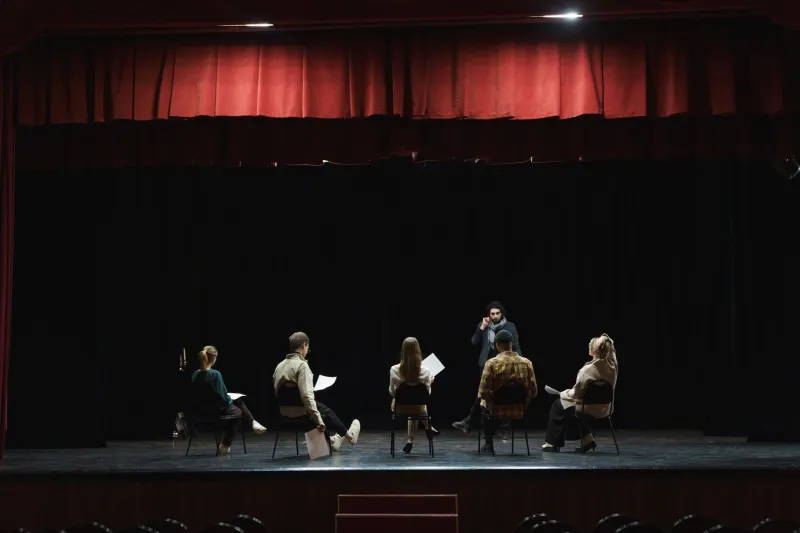
For generations, the mythology of American theater has been shaped by the singular figure under the spotlight — the star whose name appears above the title, whose contract anchors the season, and whose departure can threaten the entire enterprise. It is a romantic image, and not entirely false. But for the overwhelming majority of working theater artists in this country, that mythology has little bearing on lived reality. The question of how to build a sustainable, creatively meaningful career in the performing arts remains as urgent as ever — and a growing number of companies believe the answer lies not in the individual, but in the collective.
Ensemble-based theater companies have existed in various forms throughout American theatrical history, from the Group Theatre of the 1930s to the storefront collectives that populated Chicago's theater scene in the latter decades of the twentieth century. What is distinctive about the current moment is the degree to which these models are being formalized, refined, and — crucially — made financially functional in ways that earlier generations could only approximate.
What "Ensemble" Actually Means
The term is used loosely in contemporary theater, and it is worth distinguishing between companies that bill themselves as ensembles for marketing purposes and those that have genuinely restructured their organizational and financial DNA. Authentic ensemble models tend to share several defining characteristics: distributed decision-making authority, transparent compensation structures, long-term company membership rather than show-by-show hiring, and a deliberate investment in the artistic development of every member rather than a select few.
At the most committed end of the spectrum, some companies operate as formal cooperatives, in which members hold ownership stakes and participate directly in profit-sharing arrangements. Others adopt rotating artistic leadership, cycling directorial and curatorial responsibilities among company members across seasons. Still others maintain a more traditional administrative structure at the top while guaranteeing multi-year contracts and equitable pay scales throughout the ensemble.
None of these arrangements is without complexity. Shared governance requires a level of institutional trust and communication that hierarchical organizations rarely demand. Profit-sharing only functions meaningfully when there is profit to share — a condition that many small and mid-size companies cannot consistently achieve. And the process of making collective artistic decisions can be slow, contentious, and occasionally paralyzing.
Yet practitioners who have committed to these models speak of them with a conviction that is difficult to dismiss.
The Financial Architecture of Collective Work
One of the most persistent misconceptions about ensemble theater is that it represents a retreat from financial seriousness — a noble but economically precarious alternative to the mainstream. The evidence increasingly suggests otherwise.
Several ensemble companies operating in American cities have demonstrated that long-term membership models reduce certain categories of cost that plague traditionally structured theaters. Casting expenses, for instance, diminish substantially when a company is not rebuilding its roster for every production. Rehearsal efficiency improves when performers have worked together over years rather than weeks. Institutional knowledge accumulates rather than cycling out with each new hire.
Beyond operational savings, ensemble structures can generate distinctive funding advantages. Foundations and individual donors who are drawn to sustainability — rather than spectacle — often find cooperative models compelling. The argument that an organization is investing in artists as permanent stakeholders rather than temporary labor resonates with a philanthropic community that has grown increasingly attentive to questions of equity and worker welfare in the arts.
For the artists themselves, the financial proposition varies considerably depending on the scale and health of the company. At larger ensembles with established audiences and robust contributed income, member salaries can approach or match what a busy freelance performer might earn through constant audition and hustle. At smaller companies, the compensation may be modest — but it arrives with a consistency and predictability that the freelance life rarely affords.
What Artists Gain Beyond the Paycheck
Conversations with performers who have built their careers inside ensemble structures reveal that the financial dimension, while significant, is rarely the primary motivation. What draws artists to these companies — and keeps them — is something harder to quantify.
The opportunity to develop work over extended periods rather than sprint through a four-week rehearsal process is frequently cited. So is the experience of being genuinely known by collaborators — of having one's artistic instincts understood and trusted by people who have observed them across dozens of productions. In a profession that can feel profoundly isolating, the sense of belonging to a company with shared values and a shared history carries considerable weight.
There is also the matter of creative agency. In hierarchical theater structures, most performers occupy a position of relative powerlessness — they execute a director's vision within the parameters of a playwright's text, with limited influence over the broader artistic direction of the institution. Ensemble membership, particularly in companies with genuine shared governance, offers something different: a meaningful stake in the work being made and the institution making it.
This agency extends to the kind of work that gets produced. Ensemble companies tend to develop distinctive artistic identities over time, and their members often describe a freedom to pursue aesthetically ambitious or thematically unconventional material that commercial pressures might otherwise foreclose.
The Tensions That Remain
It would be misleading to suggest that ensemble models resolve all of the structural tensions in American theater. Some are simply redistributed rather than eliminated.
The question of growth and opportunity presents a genuine challenge. In a traditional theater, a performer's career can advance through increasingly prominent roles and higher-profile engagements. In a tightly bounded ensemble, advancement is less legible — and artists who develop significant reputations within their company may eventually feel constrained by it. The relationship between ensemble membership and outside work requires careful negotiation, and different companies navigate it in different ways.
Diversity and inclusion present another area of ongoing reckoning. Ensembles built in earlier eras sometimes calcified around the demographics of their founding membership, creating institutions that were collectively governed but not broadly representative. Newer companies have been more deliberate in this regard, but the challenge of building genuinely inclusive ensembles — across race, age, gender, disability, and economic background — remains active and unresolved.
A Model Worth Watching
The ensemble economy is not a utopian solution to the challenges facing American theater. It is, rather, a pragmatic alternative architecture — one that trades certain freedoms for others, accepts certain limitations in exchange for certain securities, and asks a great deal of the artists who commit to it.
What it offers, at its best, is a vision of theatrical life in which the work and the people making it are treated as ends in themselves rather than means to a marquee moment. In an industry that has long organized itself around the logic of the star, that reorientation carries genuine significance.
For theater enthusiasts, cultural advocates, and the artists themselves, the growth of these models represents something worth following closely. The stage has always been a place where collective imagination produces singular experiences. It may be that the institutions best equipped to sustain that magic are the ones that take the word "collective" seriously — not just in the work, but in the lives built around it.