Unguarded: How the Stage Trains Performers to Feel What the World Tells Them to Hide
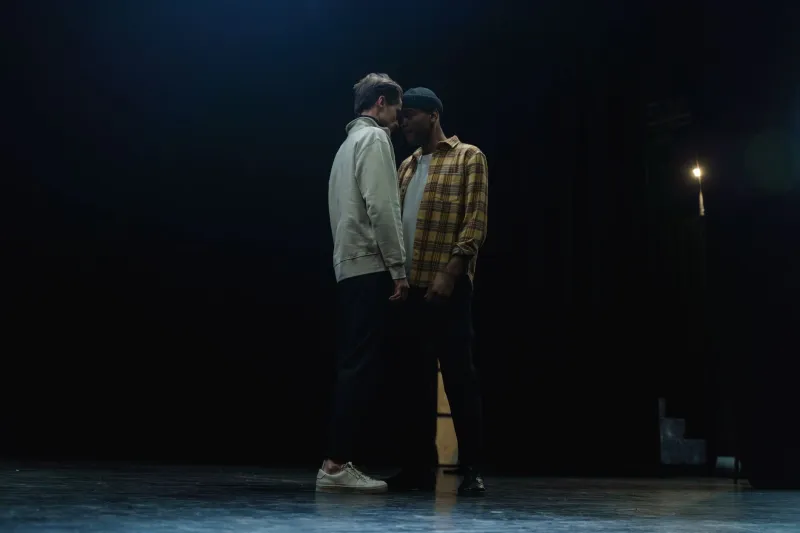
There is a particular moment in nearly every rehearsal room—a pause that experienced directors recognize immediately—when an actor stops performing and starts feeling. The line between those two states is, in many ways, the entire subject of theatrical training. And in an age when emotional self-protection has become something of a cultural virtue, the stage's insistence on genuine openness is more countercultural than it has perhaps ever been.
For performers who have spent years developing their craft, vulnerability is not a byproduct of the process. It is the process itself.
The Architecture of Emotional Armor
Psychologists and neuroscientists who study human empathy have long noted that modern social environments—particularly those shaped by digital communication—tend to reward emotional distance over authentic expression. Dr. Miriam Okafor, a cognitive neuroscientist at the University of Michigan whose research focuses on empathic response, describes what she calls the "armor instinct": the deeply ingrained tendency to present a composed, managed version of oneself in public contexts.
"We are wired for connection, but we are also wired for self-preservation," Dr. Okafor explains. "Most social environments teach us, often implicitly, that emotional exposure is a form of weakness. The theater inverts that entirely. It asks performers to locate the most tender parts of their interior life and make them legible to strangers. That is genuinely difficult neurological work."
This work, she notes, has measurable effects. Studies examining performers before and after sustained theatrical training show increased activation in the anterior insula—a brain region associated with empathic processing—as well as greater self-reported comfort with emotional ambiguity in non-performance contexts. In short, the stage does not merely teach actors to simulate feeling. It appears to expand the range of feeling they can access and tolerate in their own lives.
What Rehearsal Actually Demands
For acting coach Patricia Delacroix, who has taught at conservatories in Chicago and Philadelphia for over two decades, the transformation rarely happens at the moment a performer steps into the lights. It happens in the unglamorous middle weeks of rehearsal, when the protective habits of everyday life are quietly, methodically dismantled.
"Early in training, students confuse emotional display with emotional truth," Delacroix says. "They learn very quickly that an audience can tell the difference. You can cry on stage without anyone in the house believing you. And you can stand completely still, barely whispering, and break every heart in the room. The difference is whether you are actually present in the experience or managing it from a distance."
The methods vary by school and tradition—from Stanislavski's system of emotional memory to more contemporary somatic approaches that ground psychological work in physical sensation—but the underlying objective is consistent: to help performers locate genuine emotional material and remain in contact with it under the particular pressures of live performance.
That phrase, "remain in contact," is one Delacroix returns to repeatedly. "Most people, when they feel something intense, immediately begin managing it," she says. "Theater training is, in large part, the practice of not doing that. Of letting the feeling complete itself."
Performers on the Other Side
For many working actors, the consequences of this training extend well beyond their professional lives. Marcus Thibodeau, a character actor who has spent the last fifteen years working in regional theater from Minneapolis to Atlanta, describes the process in terms that are both pragmatic and deeply personal.
"I came into training as someone who had spent most of his adolescence being very careful," Thibodeau recalls. "I had learned that showing too much of yourself was dangerous. Theater was the first place that told me the opposite—that hiding was the danger, and that being seen was where the work actually lived."
The shift, he says, did not happen overnight. It accumulated across years of roles, rehearsals, and the particular education that comes from failing in front of an audience. "You learn that the audience is not there to catch you out," he explains. "They are there because they want to feel something. And when you give them something real, they respond in a way that no amount of technical polish can replicate."
This sentiment is echoed by Jasmine Reyes, a theater educator working with young performers in Los Angeles, who has observed the process from the other side of the rehearsal table. "What I see most often is students arriving with tremendous technical ambition and very little emotional access," she says. "They want to be brilliant. They are terrified of being exposed. And the work is almost entirely about helping them understand that those two things are not in opposition."
Vulnerability as Discipline, Not Accident
Perhaps the most important distinction that emerges from conversations with those who teach and practice theatrical performance is that stage vulnerability is not spontaneous or accidental. It is, rather, a cultivated discipline—one that requires as much rigor and preparation as any technical skill.
"People sometimes imagine that emotionally raw performances are the result of actors simply losing control," Dr. Okafor observes. "What the neuroscience suggests is the opposite. The performers who access the deepest emotional states are typically those with the most highly developed regulatory capacity. They can go further because they have developed the tools to return."
This paradox—that greater emotional openness requires greater internal stability, not less—is one that experienced theater artists tend to recognize immediately. The courage to be vulnerable on stage is not the absence of fear. It is, as Delacroix puts it, "the practiced willingness to feel the fear and remain in the room."
What the Stage Offers the World
In a cultural moment defined by performance anxiety, social comparison, and the exhausting labor of self-presentation, the theater's insistence on authentic emotional engagement carries a significance that extends beyond the art form itself. The skills that performers develop through sustained theatrical training—the capacity to tolerate uncertainty, to remain present in discomfort, to allow genuine feeling to move through them without immediately suppressing it—are, as Dr. Okafor notes, "exactly the skills that contemporary life most consistently erodes."
For the performers, coaches, and researchers who have devoted their professional lives to the theatrical process, this is not incidental. It is, in many respects, the point. The stage has always been, at its most essential, a space where human beings practice being human—in all the difficulty and grace that entails. In an age of armor, that practice may be more necessary than ever.