First Face, Last Impression: The Unwritten Craft of the People Who Run the House
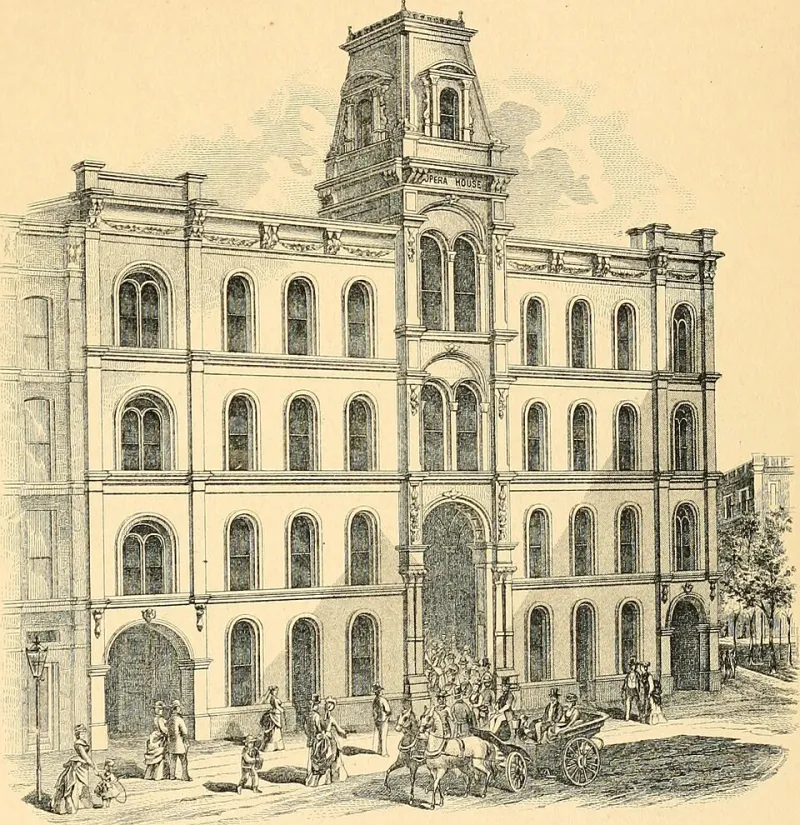
Photo: Internet Archive Book Images, No restrictions, via Wikimedia Commons
The house lights dim on cue. The actors are in place. The director has done everything a director can do. And yet, the success of the next two and a half hours may rest with a person the audience will never thank by name: the house manager watching the lobby from the mezzanine landing, counting latecomers, sensing restlessness, deciding whether to hold the curtain an extra ninety seconds.
Front-of-house work is the theater's most public and least examined discipline. Everyone has an opinion about direction, dramaturgy, even lighting plots. Almost nobody wonders what it takes to seat four hundred strangers, some grieving, some celebrating, some furious about the parking garage, into a shared experience.
Reading a Room Before the Overture
Veterans of the trade describe a skill that has no formal name. Call it audience weather forecasting. At the Gerald Schoenfeld Theatre on 45th Street, a veteran head usher says she can tell within moments of doors opening whether a house will be generous or guarded. Couples arguing in the lobby, she notes, rarely laugh at the second act. Tour groups arriving breathless from a delayed bus need two extra minutes just to breathe before the overture lands.
In smaller venues, the calculus is more intimate. At a 99-seat black box in Chicago's Logan Square, the volunteer who tears tickets is often the same person who remembers that the man in seat B12 lost his wife last spring and books him into the aisle every time. That is not customer service. That is dramaturgy of a different kind—staging the audience itself.
The Crisis Professionals Nobody Credits
Every front-of-house worker carries a private anthology of disasters averted. The patron who stood up mid-performance of a Broadway drama and began loudly reciting along with the monologues. The medical emergency during a matinee of a musical in Denver, handled so smoothly that many audience members assumed it was staged. The fire alarm during a high school showcase, evacuated in under four minutes by a house manager who had rehearsed the route with teenage ushers for exactly that eventuality.
What unites these stories is invisibility. A well-handled crisis leaves no scar on the performance, which means it leaves no memory in the audience, which means no evidence of the labor that saved the evening. "Our best nights are the ones where nobody knows we did anything," one house manager in Seattle puts it. "The worst review we can get is attention."
Setting the Temperature
Researchers who study live events talk about "emotional contagion"—the way moods travel through crowds. Front-of-house professionals understood this long before the literature did. The tone of the ticketing phone call, the warmth of the greeting at the door, the pace at which the lobby empties at intermission: these are the opening bars of the evening's score.
Consider the humble intermission. A skilled house team treats it as a second opening night. They watch for the patrons who came alone and linger by the pillar; they time the bathroom lines; they make sure the bell rings with people settled, not scrambling. A rushed intermission curdles an audience. A well-paced one sends them back to their seats primed for the second act. Directors spend months on act transitions. The house team executes one every night.
An Art Form Without a Tony
There is no Tony Award for outstanding lobby. No Drama Desk category for ticketing grace under pressure. The industry's own honors structure reflects how thoroughly front-of-house labor has been taken for granted, even as theaters nationwide report that audience retention—their most precious metric—correlates strongly with how welcome patrons felt, not how much they liked the play.
Some organizations are beginning to close the gap. A handful of regional theaters now include front-of-house staff in season debriefs, asking ushers what they heard in the lobby because, statistically, the lobby hears everything. Audience services managers have begun documenting their protocols the way stage managers document prompts, treating hospitality as a repeatable craft rather than an accident of personality.
The argument here is simple: audience experience is an art form of its own, with techniques, apprenticeships, and master practitioners. The next time the lights go down and the room falls into that collective hush that every theatergoer chases, remember that the hush was manufactured—by a professional who read the room, timed the doors, and set the temperature. The play begins long before the play begins.