Sacred Ground: The Superstitions That Bind American Theater Communities Together
Every profession carries its own mythology. Sailors read the sky for omens. Athletes refuse to wash their lucky socks during a winning streak. But few vocational cultures have cultivated a body of folklore as elaborate, as emotionally resonant, or as stubbornly preserved as the American theater community. From Broadway's storied houses to the regional stages of the Midwest, the rituals and taboos that govern theatrical life continue to shape how performers understand themselves, their craft, and one another.
These are not simply amusing curiosities passed down through green room gossip. They are, as many theater historians and practicing artists will attest, functional mechanisms — tools for managing the psychological weight of an inherently unpredictable art form.
The Ghost Light and What It Guards
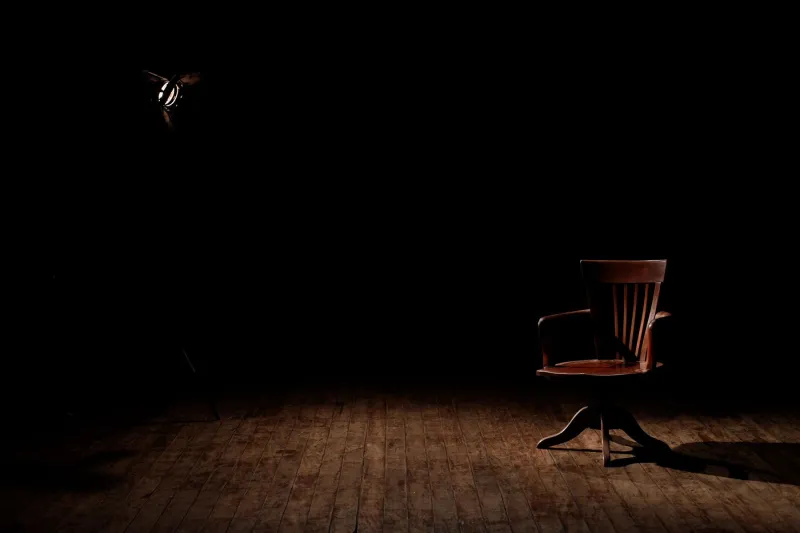
Perhaps no theatrical tradition carries more symbolic gravity than the ghost light — a single bare bulb, mounted on a stand, left burning alone on the stage after the house has emptied and the company has gone home. Its practical origins are straightforward enough: it prevents crew members from stumbling into orchestra pits or set pieces in total darkness. But its mythology runs considerably deeper.
According to one widely held belief, the light is left burning to appease the spirits of performers who haunt the theater — those who loved the stage so fiercely in life that they could not fully depart it in death. Another interpretation holds that the light maintains a kind of continuous performance, honoring the idea that a theater is never truly dark, never fully at rest.
"I've worked in theaters where the ghost light has been maintained for over a hundred years," says a veteran stage manager who has worked in regional houses across the country. "When you're the last one out and you switch it on, there's a weight to that moment. You're participating in something much larger than yourself."
That sense of participation in something ancient is precisely what makes these traditions so durable. They connect contemporary performers to a lineage stretching back centuries, offering continuity in an art form that reinvents itself with every production.
The Scottish Play and the Power of Naming
No theatrical superstition is more universally observed — or more enthusiastically tested by the uninitiated — than the prohibition against speaking the name of Shakespeare's tragedy about the Scottish king. The play, referred to almost exclusively as "the Scottish play" within professional theater circles, carries a reputation for visited misfortune upon productions that invoke its title within the walls of a theater.
The origins of the taboo are disputed. Some trace it to the play's early performances, during which real daggers were allegedly substituted for props, resulting in injury. Others point to the play's frequent use by struggling companies — its crowd-pleasing blend of violence and supernatural drama made it a reliable financial rescue, meaning it was often staged during periods of crisis. Whatever its source, the belief has achieved extraordinary longevity.
"I've seen grown adults, seasoned professionals who've been on stage for thirty years, immediately perform the cleansing ritual when someone says the name," observes a dramaturgy professor at a prominent East Coast conservatory. The prescribed remedy — leaving the theater, turning around three times, spitting, and requesting permission to re-enter — is itself a kind of miniature performance, complete with prescribed movements and verbal cues.
What is most instructive is not whether the superstition is "true" in any empirical sense, but what the communal enforcement of it accomplishes. It creates a shared language, a set of behavioral expectations, and a moment of collective participation that reinforces group identity. In a profession where companies are assembled and dissolved in rapid succession, such shared rituals perform essential social work.
Ritual as Psychological Infrastructure
Theater asks an unusual thing of its practitioners. It demands that they make themselves emotionally available, night after night, in front of strangers — and that they do so reliably, regardless of what is happening in their personal lives, their bodies, or their careers. The uncertainty inherent in this work is profound. Reviews can end careers. Injuries can close productions. Funding can evaporate between rehearsals.
In this context, superstitions function as what psychologists sometimes call "uncertainty buffers" — cognitive and behavioral strategies that restore a sense of agency in situations where objective control is limited.
"Pre-show rituals, even the ones that look like superstition from the outside, are often just structured anxiety management," explains a theater-focused performance coach based in Chicago. "If you have a sequence of things you do before every show — certain words you say, a specific warm-up order, a gesture that you share with your cast — you're not really relying on magic. You're building a container for your nerves."
This psychological dimension helps explain why superstitions persist even among performers who describe themselves as thoroughly rational. The question is not whether the ghost light actually keeps spirits at bay, but whether the act of lighting it produces a genuine effect on the person performing the gesture.
Belonging Through Shared Belief
There is also a profoundly social dimension to theatrical folklore that deserves serious attention. Learning the superstitions of the stage is part of becoming a theater person. It is a form of cultural initiation, transmitted informally through observation and participation rather than any formal curriculum.
A young actor arriving for their first professional contract quickly discovers that certain things are simply not done — that "good luck" is replaced with "break a leg," that whistling backstage is strictly forbidden (a tradition rooted in the era when stagehands used whistled signals to coordinate fly system cues, making an errant whistle genuinely dangerous), that flowers are presented after a performance rather than before.
"There's a moment when you realize you've internalized all of it," recalls a performer currently appearing in a national tour. "You correct someone else without even thinking about it, and then you realize — oh, I'm part of this now. I carry this with me."
That sense of carrying something — of being a custodian of a living tradition — is among the most meaningful gifts that theatrical folklore offers its practitioners. In an industry where financial security is elusive and recognition is unevenly distributed, belonging to a community with its own history, its own language, and its own sacred ground is not a small thing.
The Traditions That Endure
As American theater continues to evolve — diversifying its stages, expanding its definitions of performance, and welcoming communities that were long excluded from its mainstream — the question of which traditions will persist and which will be retired is a live one. Some superstitions carry origins that contemporary companies are rightly examining with care. Others feel as essential as the stage itself.
What seems clear is that the impulse behind theatrical superstition — the desire to transform uncertainty into ritual, to build community through shared belief, to honor the uncanny weight of live performance — is not going anywhere. As long as performers gather in the dark before the lights rise, they will find ways to mark that moment as sacred.
The ghost light will keep burning.