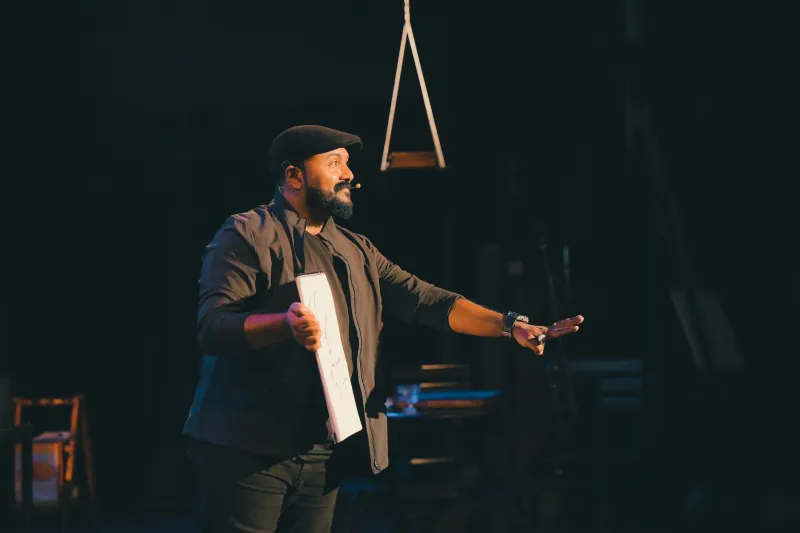
Writing Into the Room: How American Playwrights Negotiate Vision, Voice, and the Audience They Cannot Ignore
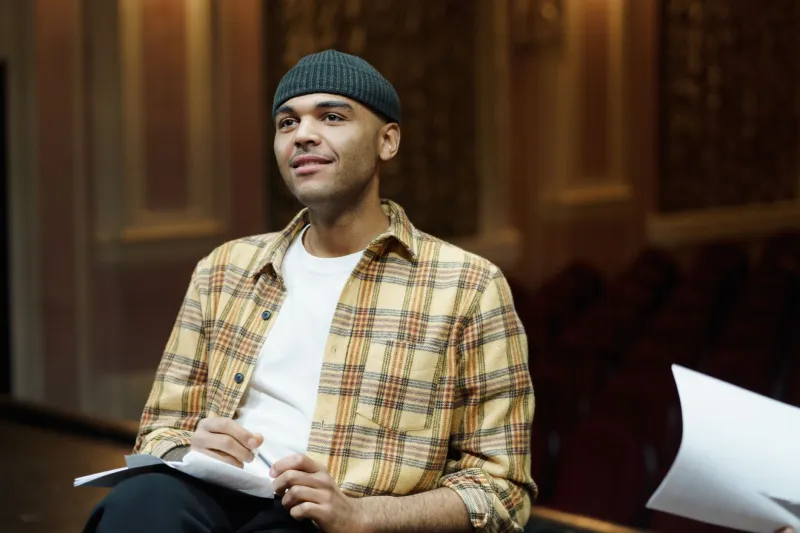
A playwright sits alone with a blank page. The work ahead is, in its earliest stages, entirely private — a conversation between the writer and the characters taking shape in their imagination. But the American theater is not a private enterprise. It is a communal one, dependent on the presence of an audience, the support of institutional producers, and increasingly, the approval of a public conversation that moves faster and louder than any dramaturg's note.
The question of who playwrights are writing for — and how consciously they account for that audience — has become one of the more consequential and underexamined conversations in contemporary American theater.
The Audience in the Room Before Opening Night
Most playwrights will tell you, with varying degrees of conviction, that they do not write for an audience. They write for the play. They follow the logic of the characters, pursue the emotional truth of the material, and trust that the work will find its people.
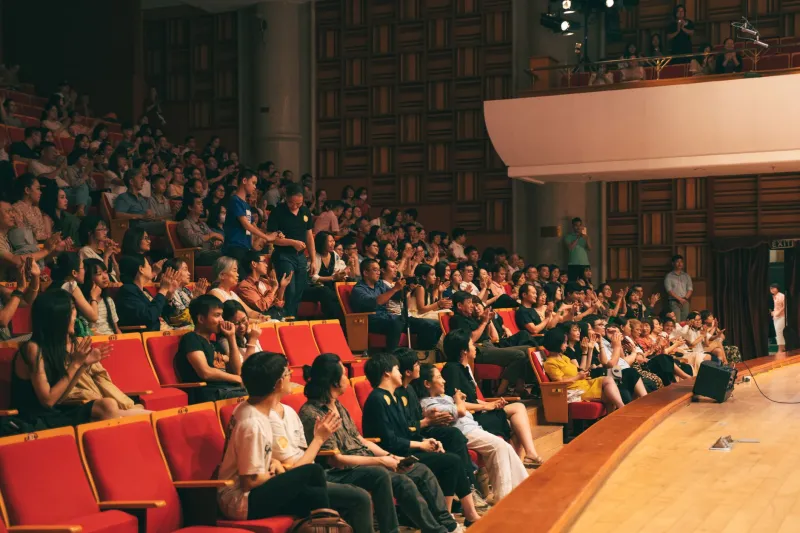
But this position, however sincerely held, coexists with a set of structural realities that are difficult to ignore. Regional theaters — which remain among the primary producers of new American plays — operate largely on subscription models built around audiences that skew older, whiter, and more economically comfortable than the general population. A playwright whose work is commissioned by such an institution is, whether they acknowledge it openly or not, writing into a specific room.
"I think every playwright carries a kind of internal demographic map," says one Chicago-based dramatist whose recent work has received productions at several prominent regional houses. "You don't always consult it consciously, but it's there. You know which jokes will land in certain rooms and fall flat in others. You know which silences will read as powerful and which will read as alienating."
This awareness, she is careful to note, is not the same as capitulation. It is, rather, a form of theatrical literacy — an understanding of the instrument through which the work will be transmitted.
Commercial Pressure and the Shape of a New Play
The relationship between artistic vision and commercial viability is not new to the American stage. Playwrights from Eugene O'Neill to August Wilson navigated versions of this tension throughout their careers. What has changed is the speed and visibility of the feedback mechanisms now available to producers, literary managers, and the playwrights themselves.
Social media has introduced a new layer of audience response that arrives before, during, and long after a production's run. A play that generates controversy — around its subject matter, its casting choices, its language, or its political content — can find itself at the center of a public conversation that shapes audience expectations and institutional decisions in ways that were simply not possible a generation ago.
"The conversation used to happen in the lobby after the show," observes a literary director at a mid-sized regional theater in the Southeast. "Now it happens on opening night, before the second act. And it keeps happening for weeks. That changes how institutions think about risk, and it changes how some playwrights think about what they're willing to put on the page."
The question of risk is central here. Challenging subject matter, unconventional form, and unresolved dramatic conclusions have always required institutional courage to produce. The current environment has, in the estimation of several theater professionals interviewed for this article, made some institutions more cautious — and made some playwrights more strategic.
Casting, Language, and the Politics of Representation
Few decisions in the development of a new play carry more weight in the current moment than choices around casting and language. American theater has undergone a genuine — if incomplete — reckoning with its historical exclusions, and playwrights working today are navigating a landscape in which questions of representation, authenticity, and whose stories are being told by whom have moved from the margins of critical discourse to its center.
For some playwrights, this shift has been clarifying. It has created space for stories that would previously have been deemed too narrow in their focus or too unfamiliar in their cultural specificity to attract institutional support.
"There's a generation of playwrights writing now who never had to fight to justify the existence of their perspective," says a dramatist and educator whose work centers the experiences of immigrant communities. "That's genuinely new. The room has expanded."
For others, the expanded conversation brings its own complications. The pressure to ensure that work is received as appropriately representative — to avoid misrepresentation, to cast with demographic precision, to use language that will not be read as exploitative or appropriative — can, in some instances, operate as a constraint on the imaginative freedoms that dramatic writing has historically claimed as its own.
"I'm not interested in writing a play that announces its politics in every line," says a playwright whose recent Broadway-adjacent work sparked both admiration and criticism for its treatment of a contested historical moment. "Drama requires contradiction. It requires characters who hold views you disagree with, situations that resist easy resolution. If you sand all of that down in response to anticipated criticism, you don't have a play anymore. You have a position paper."
The Emerging Playwright's Calculus
For writers earlier in their careers, the pressures are simultaneously more acute and more complex. Emerging playwrights are building reputations in an environment where institutional gatekeepers, grant-making bodies, and public audiences all have visible and sometimes conflicting expectations.
MFA programs, which serve as the primary training ground for a significant portion of American playwrights, have themselves become sites of negotiation between artistic freedom and evolving community standards. Workshop processes, which were once relatively protected spaces for exploratory drafts, now sometimes occur under conditions of heightened scrutiny.
"I've sat in workshops where writers were clearly self-censoring in real time," says a faculty member at a prominent playwriting conservatory. "They'd write something bold and then pull back from it in the next draft, not because the dramaturgical feedback suggested it, but because they were anticipating a reaction. That's a loss."
The counterargument — that accountability to community standards is not censorship but craft — is also made with sincerity by thoughtful practitioners. The debate is not easily resolved, and the most honest observers acknowledge that both positions contain genuine insight.
What the Tension Produces
It would be a mistake to conclude that the negotiation between artistic vision and audience demographics produces only compromise or diminishment. Some of the most compelling American plays of the past decade have emerged directly from the friction between what a writer needed to say and the complex, contested room they were saying it into.
That friction, when navigated with integrity, can sharpen a playwright's thinking, deepen their engagement with form, and produce work that speaks to a wider range of human experience than a purely private vision might have reached.
The stage has always been a place of negotiation — between the written word and the spoken performance, between the director's interpretation and the actor's embodiment, between the playwright's intention and the audience's reception. The current moment has made that negotiation more visible, more public, and more consequential.
For American playwrights willing to work honestly within that complexity, the room — however difficult it may be to read — remains full of possibility.