Small Town, Full House: The Unlikely Theater Boom Reshaping Rural America

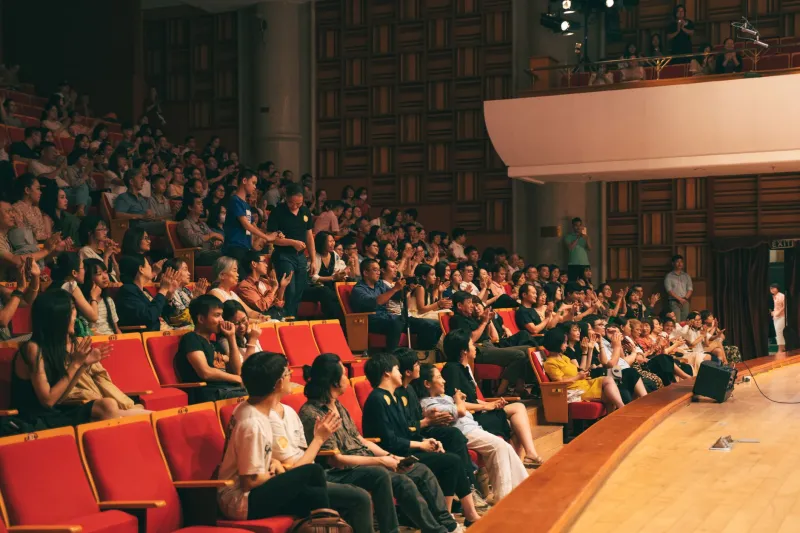
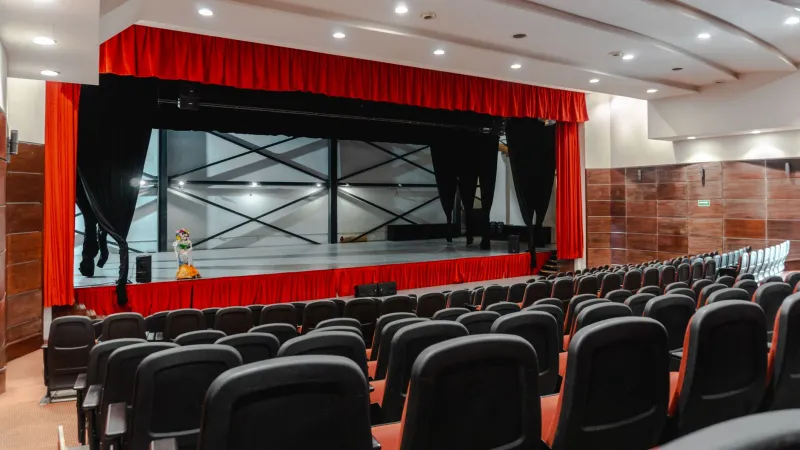
The Roxy Regional Theatre in Clarksville, Tennessee, seats fewer than two hundred people. Its operating budget would not cover a single week of production costs at a mid-sized Broadway house. And yet, on a Tuesday evening in late autumn, every seat is occupied. The audience ranges in age from elementary school children to retirees in their eighties. Many of them know the performers by name—not because they have read a program, but because they live down the street from them.
This is not an anomaly. Across dozens of small cities and rural communities throughout the United States, local theater companies are generating the kind of institutional loyalty and civic engagement that far larger organizations spend millions of dollars trying to cultivate. The question worth asking is not simply how they survive. It is what they understand that the broader industry does not.
The Myth of the Cultural Desert
For decades, the dominant narrative in American cultural discourse has positioned theatrical life as fundamentally urban—a phenomenon concentrated in New York, Chicago, Los Angeles, and a handful of regional hubs. Communities outside those corridors were understood, often condescendingly, as cultural wastelands awaiting the civilizing influence of metropolitan institutions.
The reality on the ground tells a considerably more complicated story.
A 2022 survey conducted by the American Alliance for Theatre & Education identified active theatrical programming in counties across all fifty states, including communities with populations well under five thousand. Many of these programs operate without professional staff, dedicated performance spaces, or reliable grant funding. What they possess instead is something harder to quantify: an audience that regards the theater not as an optional cultural amenity but as a fundamental part of community life.
"In a city, theater competes with fifty other things for your attention on any given evening," observes Daniel Hurst, the producing director of a community theater in Cody, Wyoming, that has operated continuously since 1949. "Here, we are often the only game in town. That changes the relationship entirely. People don't come because they heard a good review. They come because this is theirs."
Sustaining the Impossible
The operational realities of small-town theater require a particular brand of ingenuity that metropolitan companies rarely develop. Without access to the donor networks, corporate sponsorships, and foundation grants that sustain urban institutions, rural companies have developed funding models that are, in many cases, more community-integrated and financially resilient than their larger counterparts.
In Brevard, North Carolina, the Brevard Little Theatre has sustained itself for over eighty years through a combination of season subscriptions, local business partnerships, and an annual fundraising gala that has become one of the town's most anticipated social events. The theater's board of directors includes a veterinarian, a hardware store owner, a high school principal, and a retired county commissioner—a cross-section of civic life that ensures the institution remains accountable to and embedded in the community it serves.
Similar structures appear throughout the rural theater landscape. In Fairfield, Iowa, the Revelations Theater Company operates out of a converted grain storage facility and has developed a touring program that brings productions to communities across a five-county region. In Natchitoches, Louisiana, a theater collective founded by a group of retired educators draws audiences from neighboring parishes and has become, somewhat improbably, a regional destination for theatrical tourism.
"We cannot afford to be precious about what theater is supposed to look like," says Carla Whitfield, the artistic director of a community theater in rural eastern Tennessee. "We do what we have to do. We build our own sets. Our costume shop is three volunteers and a sewing machine. And we put on work that is as good as anything I saw when I lived in Nashville—sometimes better, because there is so much at stake for everyone involved."
Talent in Unexpected Places
One of the persistent assumptions about rural theater is that it operates without access to meaningful artistic talent. This assumption, too, requires revision.
The pandemic-era migration of performers and theater professionals away from expensive urban centers has accelerated a trend that was already underway: the gradual redistribution of theatrical talent into communities that had previously lacked the infrastructure to attract or retain it. A number of small-town theater companies have benefited directly from this shift, gaining access to directors, designers, and performers with professional credentials who have chosen—for reasons of affordability, quality of life, or personal circumstance—to plant roots outside major metropolitan areas.
In Taos, New Mexico, the Taos Center for the Arts has developed a residency program that draws working artists from across the country, offering them subsidized housing and production support in exchange for community engagement work. The arrangement has generated productions of notable ambition and introduced local audiences to theatrical work they might otherwise never encounter.
Beyond migration, however, rural theater has always cultivated its own. Many of the most committed and skilled performers working in small-town companies are lifelong residents of those communities—individuals who developed their craft entirely within local theatrical ecosystems and who bring to their work an authenticity of place and experience that no amount of conservatory training can manufacture.
What the Cities Can Learn
For all the challenges that small-town theater confronts, it models something that major institutional theaters have increasingly struggled to achieve: genuine community ownership. When the audience is also the donor base, the volunteer workforce, and the neighbor of the person on stage, the relationship between an institution and its public becomes something qualitatively different from the transactional dynamic that characterizes many urban theater markets.
This integration has practical consequences. Community theaters in small towns tend to have higher subscription renewal rates, more consistent volunteer engagement, and greater resilience during periods of financial stress than comparably sized urban companies. They also, research suggests, generate more durable civic benefits—stronger social cohesion, higher rates of arts participation among young people, and a more robust sense of shared cultural identity.
"Urban theaters spend enormous resources trying to build community," says Hurst. "We are community. We didn't have to build it. We just had to show up and do the work."
The work, in the end, is the same wherever it is done. A play performed in a converted grain warehouse in Iowa or a two-hundred-seat house in Tennessee is governed by the same fundamental laws as any production on any stage in the country: the laws of human attention, emotional truth, and the irreducible power of live performance. What the small-town stage demonstrates, with particular clarity, is that those laws do not require a metropolitan address to operate.