Daylight on the Stage: How Matinee Performances Are Quietly Becoming Theater's Most Adventurous Hours
The Afternoon Shift
For decades, the matinee carried a particular reputation in American theatrical culture — a gentler, somewhat diminished version of the real thing, populated by school groups, retirees, and theatergoers who preferred to be home before dark. It was, in the common imagination, the understated cousin of the evening performance: same show, softer crowd, fewer stakes.
That perception is changing with remarkable speed.
Across regional theater companies from Minneapolis to Miami, artistic directors and program managers are reconsidering what the afternoon slot can genuinely offer — not as a secondary showing, but as a distinct creative and institutional opportunity. The matinee, it turns out, may be one of the most underutilized instruments in the American theater's toolkit.
A Laboratory Without the Pressure
Evening performances carry weight. Critics tend to attend them. Donors appear. Board members settle into their seats. The social and institutional stakes of a Friday or Saturday night show create an atmosphere in which risk-taking, however valued in principle, can feel quietly discouraged in practice.
Matinees operate under different conditions. The audience is often more varied in its expectations, less attuned to the conventions of theatrical reviewing, and — crucially — more forgiving of the unexpected. This dynamic has not gone unnoticed by the artistic leaders who program them.
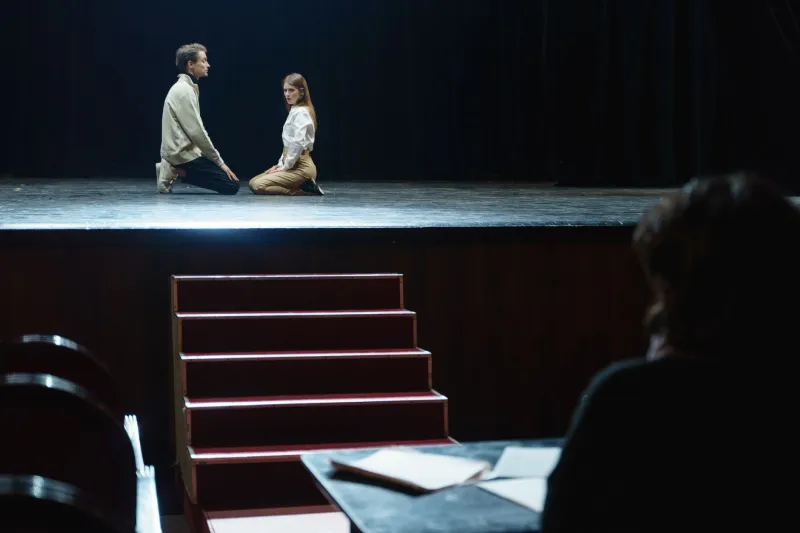
Several regional companies have begun using afternoon performances to introduce staging variations that might not survive the scrutiny of a Saturday evening crowd. A director might restructure Act Two pacing, test a different blocking approach for a pivotal scene, or allow an ensemble member to step into a role that would conventionally belong to a more senior performer. These are not errors or substitutions born of necessity. They are deliberate creative experiments, conducted under live conditions with a real audience.
The feedback loop is immediate and instructive in ways that rehearsal rooms simply cannot replicate.
Reaching Audiences the Evening Schedule Misses
Beyond the purely artistic dimension, matinees serve a significant audience-development function that the field is only beginning to take seriously. Evening performances — with their implicit demands on transportation, childcare, and the rhythms of a full workday — are structurally inaccessible to large segments of the American public.
Parents of young children. Older adults whose mobility or energy makes late-night outings difficult. Shift workers whose schedules fall outside the conventional nine-to-five pattern. Young people in educational settings who cannot attend on weeknights. These are not marginal demographics. Together, they represent a substantial portion of the population that theater, as an art form, has historically struggled to reach.
Afternoon programming addresses that gap directly. Companies that have invested in matinee outreach — through partnerships with schools, senior centers, community organizations, and disability advocacy groups — report not only stronger attendance at those specific performances but measurable growth in first-time theatergoers who subsequently return for evening shows.
The matinee, in this sense, functions as a point of entry. It lowers the threshold without lowering the standard.
New Works and the Afternoon Audience
Perhaps the most consequential development in the matinee's evolving identity is its relationship to new work. Premiering an unfamiliar play on a Friday evening carries genuine institutional risk. Audiences arrive with expectations shaped by marketing, word of mouth, and the social dynamics of a high-visibility event. An experimental text or unconventional structure can feel like a provocation under those conditions — something to be judged rather than experienced.
Afternoon audiences, by contrast, tend to arrive with fewer preconceptions. They are often more curious and less defensive, more willing to sit with ambiguity and less invested in confirming what they already believe about theater. Playwrights and directors who have navigated new-work premieres in matinee slots frequently describe the experience as qualitatively different — more open, more conversational, more generative.
Some companies have formalized this intuition. Post-show discussions, once reserved for special events, are becoming standard features of matinee programming at forward-thinking institutions. Talkbacks following afternoon performances of new plays create genuine dialogue between artists and audiences at a moment when the work is still forming its relationship with the public — before reviews, before the cultural consensus has hardened.
This is the kind of exchange that theater, at its most vital, was always meant to produce.
Casting Differently in the Afternoon
The matinee's comparative freedom also extends to casting decisions that might generate friction in higher-visibility contexts. Swing performers and understudies who rarely receive full-run opportunities are finding that afternoon slots provide meaningful stage time — not as emergency replacements, but as scheduled, intentional assignments.
For a performer who has spent months learning a role from the wings, the chance to inhabit it fully before a live audience is professionally and artistically significant. It develops confidence, clarifies interpretation, and produces the kind of embodied knowledge that no amount of rehearsal can fully substitute for.
Beyond the understudy question, some companies are using matinees to cast against type in ways that challenge conventional assumptions about who belongs in which roles. An older performer in a role typically associated with youth. A performer from an underrepresented background in a part that has historically defaulted to a narrower demographic profile. These choices, made in the afternoon, create precedents that can gradually shift the possibilities of the evening program as well.
Rethinking the Value Hierarchy
The shift in how American theaters are approaching matinee programming reflects something larger than scheduling strategy. It represents a quiet reconsideration of the value hierarchy that has long governed how theatrical institutions allocate their creative energy and institutional attention.
When the evening performance is treated as the only serious venue for artistic ambition, the afternoon becomes a remainder — something to be managed rather than cultivated. When the afternoon is treated as a space with its own distinct possibilities, the entire program becomes richer.
The theaters making this shift are not abandoning their commitment to excellence in the evening hours. They are expanding their definition of where excellence can live, and who gets to participate in producing it.
In doing so, they are discovering something that the American stage has perhaps always known but occasionally forgotten: that the work does not diminish when the sun is still in the sky. If anything, it finds a different kind of light — and sometimes, that light reveals things the evening would never have shown.