The Numbers Behind the Curtain: How Regional Theaters Are Using Data to Serve Art—Not Replace It
For as long as nonprofit theater has existed in America, its leaders have wrestled with a question that refuses easy resolution: To whom does the stage ultimately belong? The answer, in practice, has always involved a negotiation—between the artistic director's vision, the board's fiscal responsibilities, the community's appetite, and the playwright's demands on all three. What has changed in recent years is not the nature of that negotiation, but the sophistication of the tools being brought to the table.
Across the country, regional theaters are quietly building data infrastructure that would have seemed foreign to the field a decade ago. Audience analytics platforms, post-show survey engines, zip-code mapping tools, and social listening software now sit alongside casting breakdowns and dramaturgical notes in the offices of companies that once prided themselves on operating almost entirely by instinct and conviction. The question animating the field is not whether to use these tools, but how to use them without allowing the metrics to become the mission.
What the Numbers Actually Tell Us
The data regional theaters collect is often more nuanced than critics of the trend acknowledge. Ticket sales figures alone have always been available; what modern analytics add is context. Which productions attract first-time attendees who never return? Which shows draw audiences from underserved zip codes that the theater has historically failed to reach? Which programming decisions correlate with subscription renewals, and which correlate with lapsed memberships?
At its most useful, this information does not tell an artistic director what to produce. It tells them who is and is not in the room—and opens a conversation about why. A theater in the Midwest that discovers its adventurous new-work programming draws a younger, more diverse audience than its classic revivals is not receiving a directive from a spreadsheet. It is receiving an invitation to interrogate its own assumptions about what its community wants and needs.
The distinction matters enormously. Data can describe behavior. It cannot explain aspiration, and it cannot replace the artistic judgment required to know when a community needs to be challenged rather than confirmed in its existing preferences.
The Temptation of the Safe Season
The risk, of course, is real. Regional theaters operating under chronic financial pressure—a condition that describes the overwhelming majority of the nonprofit sector—face powerful incentives to program toward certainty. A familiar musical, a beloved holiday production, a star-driven revival of a canonical American play: these are not artistically bankrupt choices, but when they crowd out new voices, difficult subjects, and formally adventurous work, the theater begins to function less as a cultural institution and more as a reliable entertainment option.
Several artistic directors interviewed for this piece described a creeping awareness that their seasons had begun to reflect what their audience surveys said audiences wanted, rather than what their dramaturgical instincts said audiences needed. One described the phenomenon as "programming by rearview mirror"—using past attendance patterns to predict future desires, with the inevitable result that the season looks remarkably similar to the one before it.
The problem with that approach is not merely aesthetic. Theaters that cease to surprise their audiences eventually lose them anyway—not to competing forms of entertainment, but to the more insidious force of irrelevance. A theater that never challenges is a theater that has quietly ceased to matter.
Building a More Honest Feedback Loop
The more promising applications of audience engagement data involve not what to produce, but how to build relationships that sustain adventurous programming over time. A growing number of regional theaters are investing in what some practitioners call "audience development infrastructure"—the long-term work of cultivating patrons who trust the institution enough to follow it into unfamiliar territory.
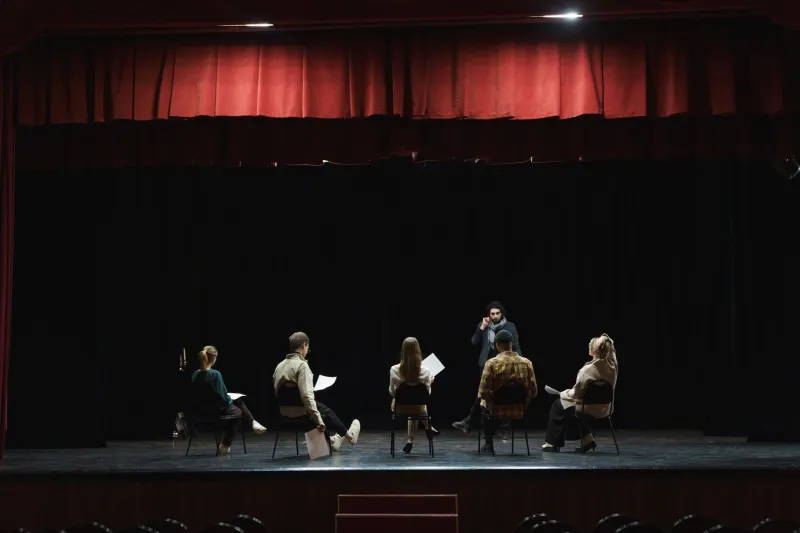
This work takes many forms. Some theaters have formalized post-show conversations, not as promotional events but as genuine listening sessions where audience members are invited to express confusion, discomfort, or resistance alongside enthusiasm. Others have developed community advisory panels drawn from neighborhoods and demographic groups not traditionally represented in their subscriber base, using those relationships to inform programming decisions before seasons are announced rather than after tickets fail to sell.
The underlying philosophy is that data is most valuable when it is collected in dialogue rather than surveillance. An audience member who fills out a post-show survey is providing a data point. An audience member who attends a community conversation about the theater's upcoming season is participating in the institution's life. The difference between those two relationships is the difference between a consumer and a stakeholder—and theaters that cultivate stakeholders tend to have more latitude to take artistic risks.
Integrity as a Long-Term Strategy
There is a practical argument for artistic integrity that often goes underarticulated in conversations about theater economics. The regional theaters that have maintained the strongest long-term relationships with their communities are, almost without exception, those that have remained willing to disappoint their audiences in the short term in service of a vision that proves meaningful over time.
This is not a romantic claim about the nobility of suffering for art. It is an observation about institutional trust. A theater that consistently programs challenging, sometimes polarizing work—and that communicates honestly with its audience about why—builds a relationship premised on respect rather than reassurance. Audiences who feel respected are more likely to return after a production they disliked than audiences who feel they have been served something unexpectedly unfamiliar.
The data, in this sense, is most useful when it is used to strengthen communication rather than to eliminate risk. Knowing that a significant portion of your subscriber base found a recent production difficult does not mean you should not have produced it. It may mean you should have done more to prepare your audience for what they were about to experience—through program notes, pre-show conversations, or the simple act of an artistic director speaking directly about why this particular story felt necessary right now.
The Stage as a Place of Productive Discomfort
The most thoughtful leaders in American regional theater today seem to share a conviction that the stage's value to its community is inseparable from its willingness to create productive discomfort. That conviction is not incompatible with careful attention to audience behavior and community feedback. In fact, the two impulses—artistic courage and genuine listening—are most powerful when they inform each other.
The theater that uses data to understand its audience more deeply, and then uses that understanding to make a more compelling case for difficult work, is not compromising its mission. It is fulfilling it with greater precision. The theater that uses data to avoid difficulty is doing something else entirely—and the numbers, over time, will reflect the difference.
The stage has always been a place where a community gathers to see itself reflected, questioned, and occasionally transformed. That function does not require choosing between the artist's vision and the audience's presence. It requires, instead, the institutional wisdom to know that both are necessary—and the courage to refuse the false choice between them.