The Open Stage: Rethinking Accessibility as an Artistic Commitment, Not a Compliance Checkbox
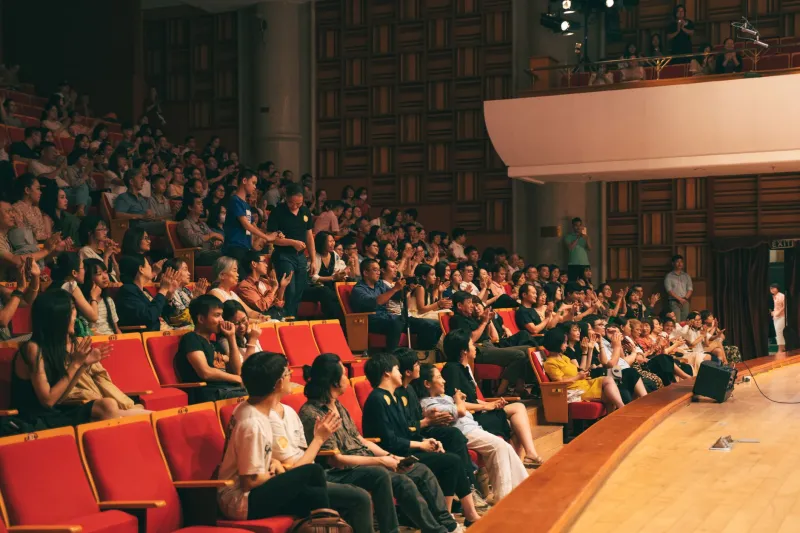
When a prominent regional theater in the Pacific Northwest announced last season that it would offer audio-described, captioned, and relaxed performances for every production in its mainstage season—not as supplementary events, but as standard features of its programming calendar—the response from the disability arts community was, by most accounts, one of cautious celebration. The response from a small but vocal segment of the theater world was something rather different.
The objections raised were familiar ones: that captioning screens distract from carefully designed visual compositions; that relaxed performances alter the acoustic and behavioral environment that directors have worked to create; that content advisories flatten the element of surprise that gives certain theatrical works their power. Underneath these specific concerns lay a more fundamental anxiety—the suspicion that accessibility accommodations, however well-intentioned, represent a negotiation with artistic compromise.
This debate, which has been simmering in American theater for years, has in recent seasons reached something approaching a boiling point. And the positions within it are considerably more nuanced than the loudest voices on either side tend to suggest.
The Stakes of the Conversation
Approximately one in four American adults lives with some form of disability, according to the Centers for Disease Control and Prevention. A significant portion of those individuals—whether managing sensory sensitivities, mobility limitations, hearing or vision impairments, or cognitive differences—encounter barriers to theatrical attendance that have nothing to do with interest or inclination and everything to do with infrastructure and institutional will.
For disability advocates and accessibility specialists, this is not primarily an artistic question. It is a question of who theater believes it is for.
"When we frame accessibility as a compromise, we have already accepted a premise that I reject entirely," says Renata Osei, a disability arts advocate based in Washington, D.C., who consults with theater companies on inclusive programming. "The premise is that there is a default audience—able-bodied, neurotypical, hearing, sighted—and that everyone else is an accommodation. I would ask theaters to examine where that assumption comes from and what it costs them."
The cost, she argues, is measured not only in the audiences excluded from theatrical life, but in the artistic impoverishment that results from designing work for a narrower and less representative slice of human experience.
What Directors Actually Face
For working directors, the practical dimensions of accessibility integration can be genuinely complex—and the complexity deserves honest acknowledgment rather than dismissal.
Caption screens, when poorly positioned, can compete with scenic design in ways that undermine carefully constructed visual hierarchies. Relaxed performances, which permit audience members to move, vocalize, and use personal devices, alter the social contract of live theater in ways that some directors find disorienting. Content advisories, if written without craft, can inadvertently deflate dramatic tension or signal plot developments that a work depends on concealing.
"I am not indifferent to accessibility," says a Tony Award-nominated director who asked not to be identified for this article. "I am deeply committed to it. But I think we do the conversation a disservice when we pretend there are no genuine creative tensions involved. There are. The question is whether we are willing to do the creative work to resolve them, rather than using accessibility as a reason to stop thinking."
This framing—accessibility as a creative challenge rather than a compliance burden—is one that a growing number of directors and designers are adopting, and the work it produces is, by multiple accounts, among the most formally inventive in contemporary American theater.
At the Roundabout Theatre Company in New York, recent seasons have seen caption integration treated as a design element rather than an afterthought—with caption screens positioned, colored, and timed as deliberate components of the scenic vocabulary. At Seattle's ACT Theatre, sensory-friendly performances have been developed in direct consultation with neurodivergent audience members, resulting in modifications that, in several documented cases, have been subsequently adopted for all performances because they improved the experience for everyone.
Content Advisories and the Art of Surprise
Few accessibility tools have generated more debate within the artistic community than content advisories. The objection most commonly raised is that advisories undermine the element of surprise—that part of theater's power lies in its capacity to ambush an audience, to introduce darkness or violence or grief without warning and thereby generate an emotional response that a forewarned audience cannot fully access.
This argument has genuine merit, and it is not advanced only by those indifferent to audience wellbeing. But it exists in tension with a competing reality: that for audience members with trauma histories, anxiety disorders, or other conditions that make unexpected content genuinely harmful rather than merely uncomfortable, the absence of advisories does not preserve the theatrical experience. It forecloses it entirely.
"The choice we are actually making, when we decline to offer advisories, is not between a more powerful experience and a less powerful one," argues Osei. "It is between an experience that is available to some people and one that is available to more people. I think theaters should be honest about that choice."
Some directors have approached this tension with notable creative sophistication. Rather than comprehensive scene-by-scene advisories that function as plot summaries, a number of companies have developed advisory language that acknowledges the general emotional register of a work—its engagement with grief, violence, or sexual content—without specifying when or how those elements appear. This approach, while imperfect, attempts to honor both the audience member's need for information and the director's investment in dramatic structure.
Toward a New Artistic Ethic
What the most productive voices in this debate share is a refusal to treat accessibility and artistic integrity as inherently opposed. The directors, designers, and advocates who have advanced the conversation most meaningfully tend to operate from a common premise: that the work of making theater accessible is, at its best, an extension of the same creative rigor that governs every other aspect of production.
"I have never encountered a genuine accessibility challenge that, when I took it seriously as a design problem, did not make me a better director," says Claudette Marsh, whose productions at theaters in Chicago and Boston have been recognized for their accessibility integration. "It forces you to ask why you made every choice you made. And sometimes the answer is that you made it out of habit, not intention. That is useful to know."
The open stage—genuinely open, built for the full range of human bodies, minds, and sensory experiences—is not a diminished stage. It is, if the evidence of recent seasons is any indication, a more rigorously considered one. Whether the broader field is prepared to embrace that conclusion remains, for now, an open question. But the conversation itself, contentious and unresolved as it is, may be among the most important ones American theater is currently having.