Glory in the Glitch: How Unscripted Disasters Become Theater's Most Enduring Triumphs
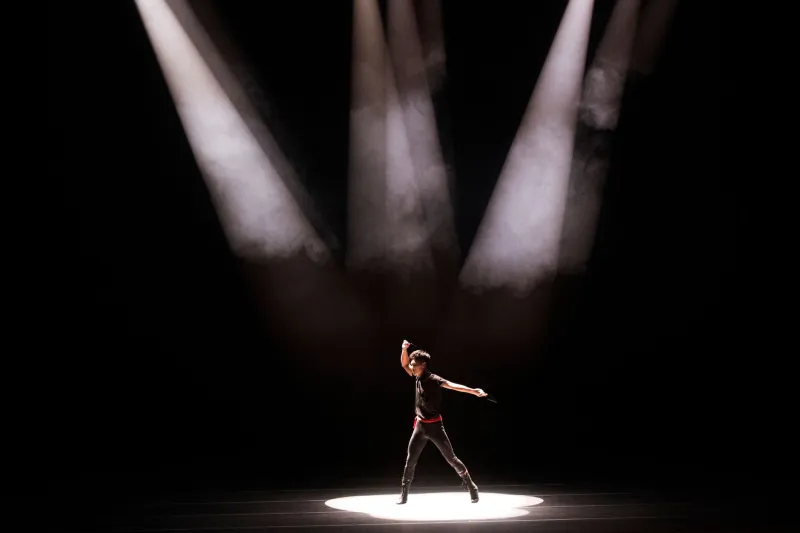
There is a particular kind of silence that falls over a theater audience when something goes wrong. It is not the silence of boredom or discomfort — it is the silence of collective breath held, of hundreds of people suddenly, acutely aware that they are watching something real. A performer stands at center stage, the line gone, the prompter too far away to help, the orchestra waiting. And then something happens that no director could have staged, no playwright could have scripted, and no algorithm could have predicted.
The audience leans in.
Live performance has always occupied a singular position in the cultural landscape precisely because of its refusal to be perfected. Film can be reshot. Recordings can be edited. But the stage offers no such mercy — and, as generations of performers and directors have come to understand, no such need. The accidents, the stumbles, the moments when the machinery of production quietly collapses are frequently the moments that audiences carry home and speak of for years.
What Rehearsal Cannot Manufacture
Every production begins with the same ambition: to eliminate uncertainty. Weeks of rehearsal, technical run-throughs, dress rehearsals, and preview performances exist, in large part, to reduce the probability of the unexpected. Directors block every movement with precision. Stage managers call every cue with practiced timing. Performers drill their lines until the words feel less like language and more like muscle memory.
And yet.
Seasoned theater professionals across the country will tell you that the performances they remember most vividly — the ones that altered their understanding of what live performance could be — were rarely the ones that ran flawlessly. They were the ones where something broke, and the people on stage had to decide, in real time, who they truly were.
This is not a romantic argument against preparation. Rigorous rehearsal is the foundation upon which spontaneous brilliance becomes possible. A performer who does not deeply know their character cannot improvise meaningfully within that character when a crisis demands it. The technical crew that has run a show a hundred times is the same crew capable of compensating invisibly when a piece of scenery refuses to cooperate. The miracle, when it comes, is built on an enormous amount of deliberate, unglamorous work.
But the miracle itself belongs to no rehearsal room.
Stories from the Edge of the Script
The annals of American theater are populated with legendary accidents. A trapdoor that failed to open during a climactic scene at a major regional house prompted the lead performer to improvise a monologue that the director later described as the finest two minutes of acting she had witnessed in thirty years of professional work. A forgotten prop — a letter central to the plot of a new play in its off-Broadway run — led to an entirely improvised scene between two performers that, by the closing night, had been permanently incorporated into the script with the playwright's blessing.
These are not isolated curiosities. Ask any performer who has spent significant time on stage, and they will produce a catalog of such moments: the co-star who dried completely and was saved by a lighting malfunction that gave them both a beat to recover; the opening night when the sound system cut out entirely during a pivotal musical number, and the cast finished the song a cappella to a standing ovation that began before the last note had faded.
What these stories share is not merely their drama. They share a quality of presence — an intensity of human contact between performer and audience that the most carefully engineered theatrical moment rarely achieves. When something goes wrong, the fourth wall does not merely thin. It disappears entirely.
The Audience as Witness
Audiences, it turns out, are acutely sensitive to the difference between performance and experience. Theatergoers who have attended hundreds of productions often describe their most profound memories in terms that sound less like aesthetic appreciation and more like testimony. They were there. They saw it. They were part of something that will never happen again in precisely that way.
This is the irreducible promise of live theater, and it is a promise that the unplanned moment honors more fully than almost any other. When a performer recovers from a stumble with grace, or when a stage manager calls an audible that saves a scene, or when two actors find each other in the wreckage of a missed cue and create something genuinely new, the audience is no longer watching a story being told. They are present at the creation of one.
Theater scholars and practitioners have long noted that audiences will forgive almost any technical failure if the human beings on stage respond to it with honesty. What audiences find genuinely difficult to forgive — what breaks the spell irreparably — is the pretense that nothing has happened when clearly something has. The cover-up, not the crime. The frozen smile that insists on perfection in the face of obvious imperfection. Audiences do not want theater to be flawless. They want it to be alive.
What the Stage Teaches About Authenticity
The broader implications of theater's relationship with failure extend well beyond the footlights. Directors and acting coaches across the United States increasingly cite the capacity to respond authentically to the unexpected as one of the most transferable and valuable skills that theatrical training develops. The performer who has learned to stay present when a scene collapses around them has learned something profound about human resilience and adaptability.
More pointedly, the culture of live performance offers a counterargument to a broader cultural obsession with the frictionless and the optimized. In an era when digital entertainment can be paused, rewound, algorithmically curated, and consumed at a moment entirely of the viewer's choosing, the theater's insistence on impermanence and risk is not a deficiency. It is a distinction.
The stage cannot be paused. The performer cannot be recast mid-scene. The audience cannot choose a different ending. And it is precisely this vulnerability — shared equally by everyone in the room — that creates the conditions for genuine human connection.
The Institutional Response
Forward-thinking theater companies around the country are beginning to recognize that their relationship with failure deserves more deliberate cultivation. Rather than treating the accident as an embarrassment to be minimized, some organizations are incorporating formal reflection on unscripted moments into their post-show discussions, dramaturgical processes, and performer training programs.
The argument is not that chaos should be engineered or that technical standards should be relaxed. It is that the instinct to recover beautifully — to meet the unexpected with presence rather than panic — is a craft skill worthy of the same attention and respect as voice work, movement, or textual analysis.
When a production finds its most luminous moment not in the perfectly executed climax but in the graceful navigation of something that went entirely sideways, it is affirming something essential about the art form: that theater is not a recording of human experience. It is human experience, happening now, with all the uncertainty and grace that implies.
The ghost light left burning on an empty stage each night is often described as a symbol of theater's continuity, its refusal to go dark entirely even when no audience is present. Perhaps it is also a symbol of something else — a reminder that the most important things that happen in a theater are the things that cannot be planned for, only prepared for. The rest, as every great performer eventually learns, is simply showing up and trusting what the moment brings.