When the Whole House Rises: The Craft and Psychology Behind Theater's Most Electric Moments
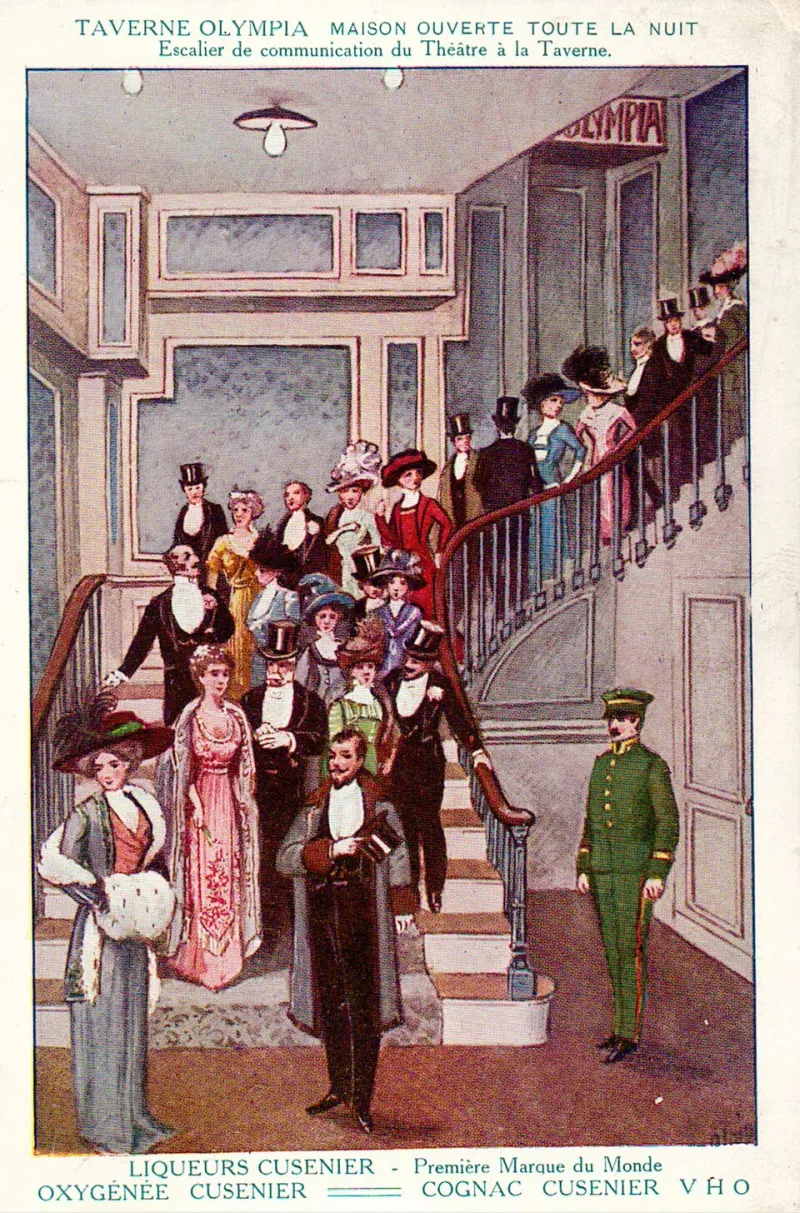
Photo: AnonymousUnknown author, Public domain, via Wikimedia Commons
There is a particular silence that precedes it. The lights fade, the last note of a song dissolves into the air, or an actor delivers a final line with such quiet devastation that the entire house holds its breath for a beat — and then the room erupts. Seats fold upward, programs fall to the floor, and hundreds of strangers become one organism, standing together in shared recognition of something extraordinary. The standing ovation is theater's most democratic and spontaneous gesture of tribute. Yet for all its apparent spontaneity, it is rarely an accident.
For theater professionals across the United States, understanding what ignites that collective response has become something of an informal field of study — one that sits at the intersection of dramatic craft, performance psychology, and the deeply human need to bear witness.
The Architecture of Emotional Climax
Playwrights and directors frequently speak of a production's emotional architecture — the careful sequencing of tension, relief, revelation, and resolution that guides an audience toward a final, resonant crescendo. Much like a composer building toward a symphonic peak, the most celebrated theater-makers construct their narratives with deliberate emotional scaffolding.
The principle is deceptively straightforward: an audience cannot be moved to stand if they have not first been made to care. That caring is cultivated across the full span of a production — through character investment, thematic resonance, and the slow accumulation of dramatic stakes. When a climactic moment finally arrives, it lands not because of what happens in that single instant, but because of everything that preceded it.
This is why some of the most enduring standing ovations in American theater history have come not from grand spectacles but from moments of radical emotional honesty. A single actor, a bare stage, and a line of dialogue that suddenly illuminates something true about the human condition — these are the conditions under which audiences most reliably rise.
The Performer's Role: Beyond Technical Execution
For performers, the pursuit of that transcendent moment requires a delicate balance between rigorous technique and genuine vulnerability. Veteran stage actors consistently describe the sensation of a standing ovation as something that cannot be manufactured through craft alone — it demands a quality of presence that goes beyond memorized blocking and polished delivery.
Many seasoned performers describe their most memorable ovations as arriving on nights when something unexpected happened — a momentary departure from routine, a deeper emotional access, or an unusually responsive audience that seemed to breathe in synchrony with the cast. The exchange of energy between performer and audience is not metaphorical; it is a documented phenomenon in performance studies, often described as a state of collective flow in which the boundary between stage and house temporarily dissolves.
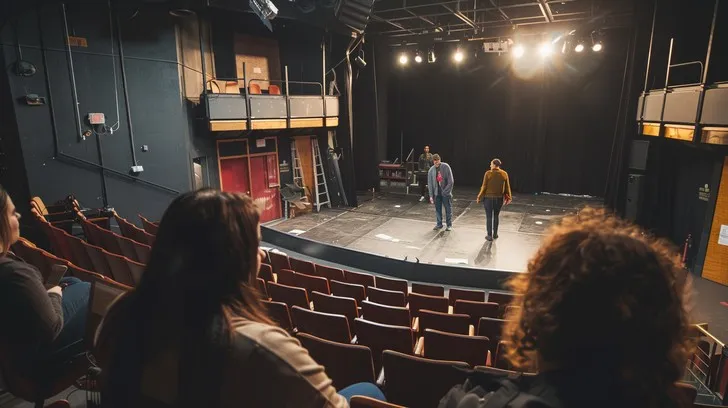
In regional theaters from Chicago's storied off-Loop stages to the intimate black-box venues of Seattle and Atlanta, directors frequently note that standing ovations are more common in smaller houses — not because the productions are superior, but because proximity amplifies emotional transmission. When an audience can see the moisture in a performer's eyes or hear the subtle catch in a voice, the experience becomes physically intimate in a way that a 2,000-seat Broadway house rarely replicates.
The Social Dimension: When One Person Stands
Psychologists who study crowd behavior have long observed that standing ovations are, in part, a social contagion. Research published in behavioral science literature suggests that once a threshold of roughly ten to fifteen percent of an audience rises, the remainder are likely to follow — driven by a combination of genuine enthusiasm and social pressure not to appear unmoved.
This dynamic raises a question that theater professionals approach with some discomfort: does the standing ovation still carry meaning if it is, at least partially, a function of social conformity rather than pure artistic judgment?
The most thoughtful answer may be that the distinction is less important than it appears. Even in cases where social momentum plays a role, the initial risers — those who stand first, before the wave — are responding to something authentic. They are the bellwethers of genuine theatrical impact, and their willingness to physically express what they feel creates the conditions for collective acknowledgment.
Furthermore, theater has always been a communal act. The audience is not a collection of isolated individuals processing a private experience; it is a temporary community, shaped by shared context, shared space, and shared emotional exposure. A standing ovation is, in this sense, the audience completing the performance — adding their own final movement to the collaborative work that began in rehearsal.
What Separates Courtesy from Catharsis
Not all standing ovations are created equal, and most theatergoers instinctively understand the difference. There is the obligatory standing ovation — the one that begins politely at a gala or benefit performance, driven more by social expectation than by genuine emotional impact. And then there is the other kind: the one that begins before the lights have fully faded, that spreads from the front rows to the back of the house in seconds, accompanied by a particular quality of sound — raw, urgent, almost involuntary.
The distinction lies largely in timing and spontaneity. A genuine standing ovation tends to begin immediately, without the deliberate pause of social calculation. It is preceded by that characteristic silence — the one that signals an audience so fully absorbed that they require a moment simply to return to themselves before they can respond.
For theater companies committed to the mission of EA Theatre — to bring the stage to life in its fullest and most vital sense — this distinction matters enormously. It speaks to a fundamental truth about why live performance endures in an era saturated with digital entertainment: no algorithm can manufacture the experience of being in a room where something real is happening, where human beings are telling stories with their bodies and voices, and where the audience feels — not merely observes — every turn of the narrative.
The Ovation as Artistic Barometer
For producers and artistic directors, the standing ovation functions as one of the most immediate and unambiguous measures of whether a production has achieved its deepest intentions. Critical reviews, ticket sales, and social media response all provide useful data — but none of them capture what happens in the room at the moment a performance concludes.
This is why many theater professionals regard the standing ovation with a reverence that transcends simple professional satisfaction. It represents confirmation that the essential transaction of live theater has been completed: a story was told, it was received, and in the receiving, something passed between the people on stage and the people in the seats that could not have occurred in any other medium.
In that moment when the whole house rises, theater fulfills its oldest and most enduring promise — to make us feel, together, what we might never have felt alone.